chitika1

chitika

Showing posts with label cell. Show all posts

Sunday, September 12, 2010

LOOKING TO LEAVES FOR SOLAR TECHNOLOGY ???

  • A leaf is constantly building new photosynthetic reaction centers to replace those damaged by oxygen and sunlight.
 
  • Scientists are experimenting with ways to apply the same principles to building solar energy cells.
 
  • This new technology could yield a system that's highly efficient, can self-repair and works well under low light conditions. 

 (this contnet is fully provided by Rachel Ehrenberg, Science News, credit to them)
Plants may hold the key to better solar technology


A new technique may one day lead to solar cells that bring themselves together like a molecular flash mob and repair damage they sustain during the rough business of turning light into electricity.

The research lays the groundwork for cheap, self-repairing solar cells with an indefinite lifetime, a team reports Sept. 5 in Nature Chemistry.

"It's a man-made version of what nature does," says nanocomposite expert Jaime Grunlan of Texas A&M University in College Station. "This really looks like ground-breaking seminal work; I've never seen anything remotely like it."

The sun's rays can be brutal, even for a leaf that's harvesting them. When photosynthesis is going full blast, a leaf is constantly building new photosynthetic reaction centers to replace those damaged by harsh oxygen species and other destructive molecules generated by intense ultraviolet light.

So rather than trying to make solar cells that are extremely durable, the team decided to take a literal leaf from nature's book and go the route of self-repair, says chemical engineer Michael Strano of MIT, who led the project. He and Stephen Sligar and Colin Wraight of the University of Illinois at Urbana-Champaign, along with other colleagues, designed a system where damaged parts could be easily replaced.

The researchers began with light-harvesting reaction centers from a purple bacterium. Then they added some proteins and lipids for structure, and carbon nanotubes to conduct the resulting electricity.

These ingredients were added to a water-filled dialysis bag -- the kind used to filter the blood of someone whose kidneys don't work -- which has a membrane that only small molecules can pass through. The soupy solution also contained sodium cholate, a surfactant to keep all the ingredients from sticking together.

When the team filtered the surfactant out of the mix, the ingredients self-assembled into a unit, capturing light and generating an electric current.

The spontaneous assembly occurs thanks to the chemical properties of the ingredients and their tendency to combine in the most energetically comfortable positions. The scaffolding protein wraps around the lipid, forming a little disc with the photosynthetic reaction center perched on top.  These discs line up along the carbon nanotube, which has pores that electrons from the reaction center can pass through.

Adding the sodium cholate back into the mix disassembles the complexes. But filtering it out again brings them right back together.

"The idea that it happens reversibly and at will is quite amazing," says Strano. "It approaches what happens in biology -- forming a huge amount of order with the flip of a switch. It's kind of like taking puzzle pieces and throwing them up in the air and them coming down assembled."

The complexes eventually lose power, but they are easily revived, says Strano. The research team disassembled the units and replenished the photosynthetic reaction centers. Four such replacements over the course of a week kept keeping the complexes humming along.

"This is very nice work -- the procedure they've got, the control they have over the system," says biochemist Mike Jones of the University of Bristol in England. "It's simple, it's very nice."

The units can't compete with silicon-based solar cells in use today. But silicon-based solar cells reached their current level of efficiency only after decades of research and development, says Jones. Similar investment in this new technology could yield a system that's highly efficient, can self-repair and works well under low light conditions, he says.

What's more, the main ingredients for these solar cells might one day be easily extracted from plant material, says Strano, perhaps even from garbage biomass. "We could turn waste into an organized product," he says.


Want to print in 3 dimensions?

  • The process is similar to an inkjet printer, however, the "ink" is powder and a bonding agent.
 
  •  Printing in layers, the machine builds up the object in three dimensions.

 Some of the gadgets engineers come up with are just cool. We’re going to check out one of them. Printing in three-dimensions. Today, on Engineering Works!

 
Most of us have home computers these days, and they’re all connected to desktop printers. Hit the print key and out comes that report you needed for work or a barbecue sauce recipe from the web. Easy.

 
That was then. "Now, a new kind of printer is taking printing into three-dimensions, not just flat on a piece of paper. These printers print out solid objects, usually in plastic. There aren’t many of the printers around yet. Technology geeks and hobbyists own most of them. They use them to make stuff like jewelry, toys, tools or kitchen appliances."

Tonight Show host and classic car collector Jay Leno even has one. His mechanics use it to print out car parts that they can’t buy any longer. They send the plastic models to machine shops to get real metal parts made, cheaper and faster than custom-designed parts.

 
The 3-D printers are starting to catch on. You can buy them in some electronics stores or directly from the manufacturers. Prices run from $750 for a desktop kit model to $27,000 for Leno’s refrigerator-sized unit. So far, it’s definitely a niche device, but enthusiasts are sure that someday we’ll be printing out things we need, not just fun stuff.

 
We can’t print out a ride home, but we’re still done. See you next time.

Engineering Works! is made possible by Texas A&M Engineering and produced by KAMU-FM in College Station. Learn more about engineering. Visit us on the World Wide Web. http://engineeringworks.tamu.edu    

Friday, September 10, 2010

new phone with new technology: HTC Touch Pro 2


With every new product that HTC launches in the market, it is increasing its stronghold in the market of phones. HTC has always catered to a large client base and there is a phone for every kind of user, from the Multimedia to the Business, you name it and they have it. Well unveiling the latest in this series is the HTC Touch Pro2. Well all of us remember when HTC took the market with a storm when the HTC touch procame out. Well the HTC Touch Pro2 has had a better response. The philosophy behind the product is that business is based on communication and this power packed device has more than just the goods to give the right boost to your business.

It has the much useful QWERTY keyboard that slides out and has spacious keys, the screen can be tilted to the right degree in order to provide you the clearest viewing experience, the screen is touch sensitive and 3.6 inch diagonally, and other features like zoom bar to zoom in and zoom out of pictures with efficiency and ease. Like the other phones, this one too has the Windows Mobile Platform and weighs less than 180 grams including the battery. It is just the phone you had been waiting for.

Wednesday, September 8, 2010

SWALLOWING DIAMONDS COULD FIND WHAT'S AILING YOU


THE GIST

  • Swallowing nanodiamonds could someday to help diagnose disease.
  • Plain nanodiamonds coat the digestive tract, coated nanodiamonds could target other organs and tissues.
  • Nanodiamonds have been proven to be nontoxic and safe in animal tests.   


Scientists from Taiwan have developed nanodiamonds that, when swallowed, harmlessly coat the digestive track. When coated with special sugars or proteins, the nanodiamonds are absorbed into the body and attach themselves to specific cells.
The research, which is currently limited to animals, could eventually diagnose and eventually treat diseases in humans.
"This research work demonstrates that nanodiamonds are non-toxic in both cellular and organismic levels," said Yi-Chun Wu, a scientist who, along with Huan-Cheng Chang and their colleagues in Taiwan, co-authored a new study in the journalACS Nano Letters.
Nanodiamonds are tiny pieces of pure carbon only a few of nanometers across. (One nanometer is about 100,000 times smaller than a human hair.) Most nanodiamonds are formed by blowing up TNT or other explosives to create high temperate and high pressures that bond carbon atoms together in a classic 3D diamond nanostructure.
These nanodiamonds are not solid, however. Inside those tiny structures are tiny holes, called vacancies, where a nitrogen atom from the air has replaced two carbon atoms. Nitrogen vacancies in diamonds are common. Natural diamonds with lots of nitrogen have a yellow tint to them. The nanodiamonds the scientists from Taiwan used absorb yellow light and emit violet light.
Next, the scientists fed two types of nanodiamonds to the round worm C. elegans. The first batch of nanodiamonds were uncoated, just pure carbon with a few nitrogen atoms. Those nanodiamonds coated the digestive tract of the transparent roundworm.
The second batch of nanodiaonds the roundworms ate were coated with a special sugar. Once inside the roundworm, the nanodiamonds passed through the digestive tract and into the body of the worm, congregating at various points inside the body.
Both the coated and uncoated nanodiamonds glowed purple when yellow light was shined onto the roundworms, revealing their location inside the worm. All the bejeweled worms had normal lifespans, and none of them showed any sign of distress, said the scientists.
The scientists fed the nanodiamonds to the worms just to measure their toxicity and to see where the diamonds ended up. More specific functions will come soon though, said Vadym Mochalin, a scientist at Drexel University who uses nanodiamonds in his own research.
Virtually any kind of protein or chemical can coat nanodiamonds. When placed into the body, those coated nanodiamonds could seek out and attach themselves to cancer cells, immune cells, pathogens and other cells.

At first, coated and glowing nanodiamonds will likely help doctors and scientists find and map cancers and other things that harm humans. After that nanodiamonds will likely be used to deliver low doses of powerful drugs to help treat those diseases.
Some researchers are most excited about using nanodiamonds to track stem cells.
"One of the most exciting applications of [fluorescent nanodiamonds] in humans is the long-term imaging, tracking, and sorting of human stem cells," said Chang.
Those stem cells could jump-start immune responses, help repair nerve damage, and potentially even regenerate entire organs if the research pans out. Those kinds of advanced therapies are still years, if not decades away however, caution scientists. But this research, along with dozens of other papers and groups working with nanodiamonds, opens the door for powerful therapies in the future.
"The nanodiamond looks very promising compared with other carbon-based nanoparticles," said Mochalin. "It's the least toxic carbon-based nanomaterial to date."
 

Tuesday, September 7, 2010

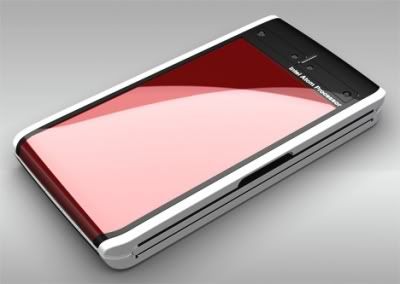
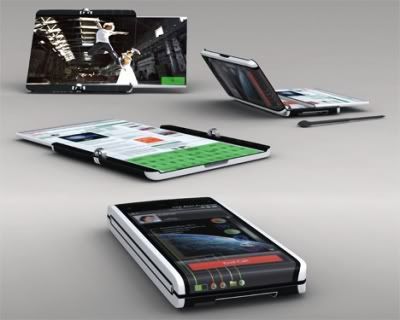
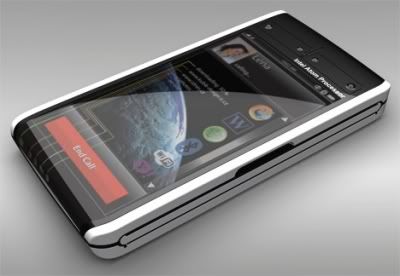
Can you fold your mobile? : New Triple fold screen mobile phone

New Triple fold screen mobile phone


Big screen is always in demand in the mobile phone. Because big screen give you an option to see photos and videos clearly. Now this mobile phone is coming with the folded screens. You can unfold these screen three times and as a result you can see wide and attractive screens.


Saturday, September 4, 2010

sony's show for latest gadget with new technology :Sony Expo Showcases Latest Tech

The annual Sony Hawaii Expo was held this week at the Ala Moana Hotel Hibiscus
 Ballroom.    Highlight of this year’s Sony Expo was the desktop Sony OLED flatscreen TV (shown above). The hallmark of this high tech wonder is its small size and crystal clear high definition picture. The screen itself is thinner than a compact disc jewel case.

Another hyped product at the Sony Hawaii Expo is the new Sony Rolly MP3 player. It is a new portable device that is shaped like a little barrel and moves to the beat of the music. The speakers on this device are positioned at both ends and open up with winglike flaps on each end. The device will not be marketed in the U.S. and is aimed only at consumers in Japan. If it were sold in the U.S. the price would be at around $400.
The Sony Rolly MP3 player. Sold only in Japan.
Face recognition “smile” technology for Sony Cybershot cameras were also a new this year. The new Cybershots can sense when a person smiles and fires only at that time. People were happily smiling for the demo at the Sony Cybershot booth. There were many other Cybershot digital still and video cameras that were also on display for consumers to play with.
I was most interested in the small super zoom, SLR-like cameras that I may want to get in an effort to find a capable SLR-like digital camera without all of the weight and bulk.
Last year’s hot product, the Sony Playstation 3 was almost like a has-been this year. Yes, there were displays of the venerable Playstation 3 for people to use, but the crowds around those stations were not very big. Sony is still marketing the Playstation 2 which is still the most popular game console of all time, despite Nintendo running away with the market lead on their new generation Wii product.
I am still interested in perhaps getting a Sony PSP, mainly for the fact that it can surf the web with its wireless internet feature. Another wifi device that was touted last year, the Sony Mylo, was nowhere to be seen this year. Sony still sells the device.
HDTV are the big products Sony is pushing this year as the Expo was dominated by flatscreen high definition sets all over the place. Going hand in hand with that were several Sony Blu-Ray HDTV DVD players. the pictures on the sets and from the players are incredibly clear.


People clamor around the latest Sony digital cameras.
Don’t know if I am ready to sink money in either of these technologies, especially Blu-Ray since it is locked in a format war with the rival HD-DVD. Beta vs. VHS all over again. I’ll wait for the dust to settle on this one.
Overall the Sony Expo was a great little venue to check the latest technology from one of the most popular electronic companies on the face of the earth.

Thursday, August 26, 2010

Latest TECH: Flexible, full-color OLED display

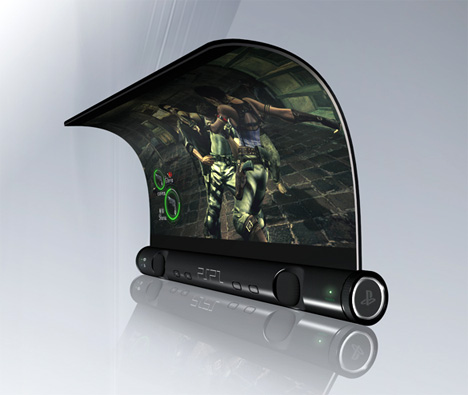
On May 24, Sony unveiled what it is calling the world's first flexible, full-color organic light emitting diode (OLED) display built on organic thin-film transistor (TFT) technology. OLEDs typically use a glass substrate, but Sony researchers developed new technology for forming organic TFT on a plastic substrate, enabling them to create a thin, lightweight and flexible full-color display. The 2.5-inch prototype display supports 16.8 million colors at a 120 x 160 pixel resolution (80 ppi, .318-mm pixel pitch), is 0.3 mm thick and weighs 1.5 grams without the driver.

According to Sony, which plans to release a new line of miniature TVs this year and is bolstering efforts to develop next-generation flat-panel OLEDs, this new technology will lead to the development of thinner, lighter and softer electronics.
The company is scheduled to present the results of its research at the SID 2007 International Symposium now underway in the US.

10 new technologies that will revolutionise your life !

Staying up to date with everything that's going on in PCs and tech is almost impossible, so these are the ten technologies that you should be most aware of, as they're the ones that'll make the biggest difference to your life.
1. 3D gaming
The fact that to get any kind of 3D image from a 2D screen means wearing a pair of sunglasses or worse means that three dimensional gaming isn't quite as convincing as multitouch and natural user interfaces, even though the two have been commoditised at almost the same time.
An Acer Aspire 5738 laptop with a 3D display costs about £550 at the moment, not bad for something with cutting edge technology that adds depth to any DirectX 9 game. The screen is of the polarised filter type, which is the new norm for extra dimensions.


Instead of using coloured filters splitting an image into two – one for each eye – the vertical pixel columns are alternated between left image and right image and shone through a piece of polarised glass. A pair of dark glasses with oppositely polarised lenses ensures that only one image is seen by each eye. The difference to a game is tangible too, something like WoW runs and looks incredible on the low-end graphics hardware.
It's over in TV land that the real push for 3D is happening, though, as LCD suppliers ask us to upgrade again to watch hyper-real cinema in the lounge. Compared to the other technologies we've talked about here, though, 3D requires a lot of effort on behalf of the watcher (those pesky glasses) and most of us are very lazy; hence the ubiquity of MP3 and standard definition movies, while Blu-ray and higher resolution sound standards continue to flounder. We value ease of use over quality every time.

In its favour, 3D doesn't actually require any work on behalf of games developers or publishers, as the stereoscopic image is created at the driver level. On the other hand, that means there's no massive push by the people who make and sell games to encourage us to adopt it.
2. Streaming games
The advancements in superfast broadband hasn't just helped the cause of downloadable games. It will also have no some small impact on the future of streaming games over broadband, or at least that's the theory.
There are several companies pursuing and a significant amount of money invested in the idea that one day, your precious PC will be almost entirely redundant as a games machine.
The concept is simple: all the game's data is hosted on a central server and all you will have to do is receive the display and send back input commands. It's a little like the technology used for MMORPGs, except that the rendering engine isn't on your PC, it's actually in the same server farm as the core intelligence.
This idea was actually mooted some years ago with the Phantom console, which never made it to the stores. It's looking unlikely that OnLive (www. onlive.com), Gaikai and Microsoft's own streaming project will end up as vapourware though, despite the obvious concerns about input lag: the delay that occurs every time you press a key. The signal has to travel hundreds of miles before a character even moves.
Proponents say that even twitch gaming FPS games are possible but we're a little more sceptical. There's another reason that at least one of these services will be properly launched soon, and that's vested interest by games publishers.
Because no content is stored on your machine, of course, it's impossible to pirate a streamed game, which is obviously an attractive proposition for them. In the immediate future, though, it is more likely to be a technology that runs like games such as Quake Live, which use a combination of some local processing power and some server-based cycles. That's certainly the route Microsoft is taking, and seems more achievable than relying on 'the cloud' at this stage.
3. Six-core processors
You won't have to wait long for this one. Intel's Westmere CPUs may be hanging around with the dregs of processor society at the moment, chucking their chips in with the integrated graphics crowd, but they're about to grow up – and fast.
Sometime over the next few months Intel will go two better than the current line up of quad-core CPUs by launching a six-core version of its high-end Core i7 line. Based on the existing Nehalem architecture, the headline feature is a process shrink down to 32nm, while the rest of the spec sheet remains largely the same. It could be a genuine upgrade.

Games programmers are getting much better at working with multithreaded code so that most major titles, like Empire: Total War and its forthcoming sequel Napoleon, will see a much bigger performance increase when given extra cores to play around in than the often sporadic leaps in frame rate we saw going from two to four cores.
Because the benefits will be in the amount of cores, rather than the speed of things you can do at once, Intel are encouraging some developers to add extra content specifically for people with a six-core CPU. Given the plethora of disappointments we've had lately with almost every technology that's promised to increase our frame rates, we'll reserve judgement until we have one in the office.
The good news is that these hexa-powered processors will fit into most existing X58 motherboards after a simple BIOS flash. The bad news is X58 motherboards are still very expensive too.
4. Wireless power
A few years ago we saw a demonstration by a team at Fulton Innovation of a product called eCoupled. Using the principle of electromagnetic induction, by which an electrical charge can be stimulated in a wire coil by placing another one nearby, the crazy boffins were able to display wireless power transfer.
Despite being high voltage, they said, it was safe, efficient and could be applied to any surface. The demo room consisted of a kitchen without plugs, but full of lights that could be stuck anywhere and a frying pan that heated up just by sitting it on the counter. Put a phone on the same counter and it began charging. Clearly, this was the future.


Fulton are still working on wireless power, but it's a different company that's beat it to the shops, Powermat – and its products are expensive for something that replaces a 50p mains plug.
The good news is that the Wireless Power Consortium are going to be finalising a standard for wireless power called Qi later this year, which should mean prices drop and manufacturers have the confidence to build the technology straight into devices, rather than requiring an adaptor.
If you think that's crazy, though, take a look at Airnergy by RCA. It's a tiny dongle that can turn Wi-Fi signals back into electricity for charging phone batteries and the like.
5. Wireless displays
The last two standards for monitors, HDMI and DisplayPort, didn't exactly have us all rushing out to upgrade our PC screens and graphics cards, so it's a safe bet that DVI will remain the cabled interface of choice for some time to come. What about connecting a monitor to your PC without wires though?
That's something that could be worth shelling out for. Two different technologies were on the show floor at CES, which should be available en masse this year.
The first, WirelessHD is being pushed by the usual line-up of TV and DVD player manufacturers as a replacement for HDMI. It uses a short range, high bandwidth in the Ultra-Wide Band (UWB) spectrum to transmit HD video and audio from a set-top box or media centre to a TV screen.
The idea is nothing new, Philips have had a kit out for a while that does the same thing, but WirelessHD is a proper standard and should ensure maker A's TV works nicely with maker B's Blu-ray machine and so on.
Perhaps more relevant for us, though, is Intel's new Wireless Display, or WiDi. It's designed specifically for laptops in order to remove the hassle of cables when you want to dock them with a proper screen, and like WirelessHD sends the video signal to a receiver box.
Unlike WirelessHD, WiDi can't handle protected content and the like, but it is much simpler since it requires no new hardware inside the laptop. Instead of using a separate transmitter, WiDi is a software layer on top of the existing Wi-Fi chip, so it's much cheaper to produce. Providing there's no latency introduced to the picture refresh rate, this could be a killer.


6. OLED displays
Yeah, we hear you. Another year, another promise that OLED screens are going to take over. Haven't we heard it all before? Except this time it could be true.
Google's Nexus phone has just launched with an OLED screen, and by all accounts it makes the handset almost – say it in hushed tones – more desirable than the iPhone. Brighter colours, sharper resolutions, darker blacks, whiter whites; why is this OLED technology so superior?
Put simply, it's because instead of filtering the light from a white or blue lamp behind the screen, each pixel in an OLED panel produces its own light. You don't have to be an optometrist to see why this is better, but it is much more expensive to produce.
Still, it also means OLED screens are much thinner than backlit ones, for obvious reasons, and while you may not be using an OLED PC monitor by the end of the year there are a lot more laptops with the technology arriving.
7. Superfast broadband
There are two things about broadband you should be concerned about. The first is whether or not the Digital Britain report, with its three strikes policy, outrageous invasion of privacy and extra charging for bandwidth, makes it into law before the general election final hits.
The second is what's going on at your exchange. By early next year, 75 per cent of us should be living in proximity to a telephone exchange that has a fibre optic connection to the internet. It's all part of BT's 21CN project to replace the entire copper telephone and broadband internet infrastructure with a single ethernet-based network fit for the 21st century.

So far, it's been dogged by delays and problems, but it's finally picking up the pace and is being tested by ISPs all over the country. The idea is that it will increase competition for high-speed broadband and bring down access prices, as well as bring services like IPTV – of the sort Virgin customers enjoy – to everyone.

It doesn't just mean better access to large downloadable game files and lower ping times, however. Our biggest hope is that it will eventually encourage telephone companies to do away with the irritating £12 a month line rental charge for a phone we don't actually use.
8. Augmented reality
Actually, we're kidding ourselves with this one. Augmented reality: the ability to overlay information on a live video feed of the world, is very cool, and it's impossible not to love iPhone apps like Yelp that pull in details and distances to the nearest pub or restaurants as you point the camera in their general direction.
Holding your phone three inches in front of your face as you're walking around feels a little too ridiculous to catch on, though. Perhaps it's like handsfree and Bluetooth headsets. Not so long ago people still sniggered if they saw someone using a phone without holding it to their ear, and not so long before that mobile phones themselves were devices for sales dorks.
Augmented reality
In a couple of years time, it may seem the most natural thing in the world to see someone walking around with a phone held at arms length, directing them to food or drink with their own personal dynamic GPS system, or pulling up interesting information about the buildings and people in front of them. Yes, that's right, people.
Twitter 360 is an iPhone app that directs you to geotagged tweeters on your friends list, while TAT (www.tat.se) is working on an Augmented ID program, so if people point a camera at you various bits of information from your social feeds floating around your head. Makes stalking a lot easier then. Scary.
9. Natural user interface
In his CES keynote presentation, Steve Ballmer made several references to the 'Natural User Interface' (NUI), which is a handy catch all to describe all the Wii wand-waving, multitouch point and Project Natal-style aerobics that are catching headlines out there.
The keyboard and mouse is by no means dead, but the sudden flood of cheap laptops and all-in-ones with a built-in, multitouch screen suggests that it won't be long before we'll all have something a little bit different on our desktops.
Over in the US, for example, custom laptop maker IBuyPower has already started selling high-end gaming notebooks with a multitouch screen, and French developer, Eugen Systems has incorporated Win7's multitouch controls into the heart of its forthcoming strategy title R.U.S.E. It's all very exciting, except for one thing.
Multitouch may be native to Win7 and no other operating system, but the implementation is nowhere near as smooth as it is on, say, the iPhone. PCFormat has yet to use a multitouch application on a PC that doesn't suffer from a bit of inaccuracy or sluggishness, and the key to the NUI is in the first word. It has to feel natural, unforced and invisible to the end user. That's what using multitouch on an iPhone is like, and that's what Windows must achieve. If the mouse remains faster and more trusted, that's what people will use.
There are some brilliant ideas out there, though. Project Natal, Microsoft's full body 3D gesture recognition system for Xbox 360, is by far the most ambitious prototype, and we can't wait for a PC hack.
At CES the prototype Light Touch projector, from Light Blue Optics (lightblueoptics.com), was a show stealer. Using a technique called holographic laser projection, this tiny projector turns any 10inch surface – flat or curved - into a sharp multitouch screen.
10. Long-term evolution
The idea of getting high speed, super-reliable mobile broadband from a cell tower to your laptop or phone via WiMAX is not quite dead in the water, but it's certainly in need of a bit of mouth to mouth.
Far from being the 'Next Big Thing' as it was touted a few years back, it's had a painful and traumatic incubation period, which has seen some US carriers begin to adopt it and, in fact, quite a few businesses use it for point to point communications, but public access has dwindled from trial areas to almost nothing.
Partly, this may be because the company which owns the licence to operate WiMAX licences in several cities, Freedom4, was recently bought out and the new owners aren't in any rush to monetise the technology. More likely, it's because the mobile phone companies are happy with the current HSPDA speeds and are betting on an alternative technology, which is known as 4G, or Long Term Evolution (LTE) to supply almost the same amount of bandwidth without completely reworking their networks for WiMAX.
Lucky Scandinavians living in Stockholm or Oslo with a TeliaSonera contract can already sign up for LTE, while O2 is planning on launching a 150Mbps LTE package in the UK some time this year. We don't expect WiMAX to give up without a serious fight, though.
In the US, mobile networks are beginning to fall over because of the volume of 3G traffic running over them, and WiMAX's new architecture could well be a way to increase capacity to cope with demand. In which case, expect to see it begin sprouting up everywhere.
Faster bits and bytes
Rather more prosaic than the technologies listed elsewhere in this article the internals of your PC are also being overhauled by the powers that be. There's a revision to the SATA standard out for disk drives, and USB 3.0 is appearing on motherboards to speed up the default peripheral connection.
They are big steps forward. SATA III doubles the bandwidth available to storage from a theoretical 3Gbps to 6Gbps, while on paper USB 3.0 is a ten-fold increase from 480Mbps to 4.8Gbps for cabled peripherals.
motherboardsMotherboards sporting ports of both flavours are already available from most manufacturers. Although both technologies are much faster than their predecessors, neither is likely to have a huge impact on consumer PCs.
In the world of business where milliseconds are money, the upgrades may mean something, but for the likes of us, compatible drives and peripherals will be a while coming yet.


Sunday, August 15, 2010

5G in near future !


5G technology will change the way most high-bandwidth user success their phones. With 5G pushed over a VOIP-enabled device, people will experience a level of call volume and data transmission never experienced before.As the customer becomes more and more aware of the mobile phone technology, he or she will look for a decent packageall together, including all the advanced features a cellular phone can have.


 Hence the search for new technology is always the main motive of the leading cell phone giants to out innovate their competitors. Recently apple has produced shivers all around the electronic world by launching its new handset, the iphone. The vast array of new technology being built into new cell phones is staggering. One hand held phone now contains more power than at least a 1000 lunar modules. Given the featured packed mobile phones on the market today, it is no wonder more and more bandwidth is necessary to run them. 


You can even use the new 5G cell technologies to hook your phone to your laptop for broadband Internet access. The modern day cell phone resembles a hand held computer more than it does a phone, as most of them contain cameras, video players, MP3 recording, and much more. What else can we expect now? The present cell phones have it all. Today phones have everything ranging from the smallest size, largest phone memory, speed dialing, video player, audio player, and camera and so on. Recently with the development of Pico nets and Bluetooth technology data sharing has become a child's play. 


Earlier with the infra red feature you can share data within a line of sight that means the two devices has to be aligned properly to transfer data, but in case of blue tooth you can transfer data even when you have the cell phone in your pocket up to a range of 50 meters. The creation and entry of 5G technology into the mobile marketplace will launch a new revolution in the way international cellular plans are offered. The global mobile phone is upon the cell phone market. Just around the corner, the newest 5G technology will hit the mobile market with phones used in China being able to access and call locally phones in Germany.

 Truly innovative technology changing the way mobile phones will be used. With the emergence of cell phones which are similar to a PDA you can now have your whole office within the phone. The 5G technology in the latest mobile phones will harness unprecedented data capabilities with just about all of the features of the most advanced computer designs. Emerging in the future 5G cell phone technology will be the ability to harness unlimited call volumes and unlimited data transfersall with the latest mobile operating systems. Thus one can say that with the current trends, the industry has a real bright future if it can handle the best technologies and can produce affordable handsets for its customers. 

Thus you will get all your desires unleashed in the near future when these smart phones take over the market.
Related Posts with Thumbnails