chitika1

chitika

Showing posts with label electronics. Show all posts

Tuesday, September 14, 2010

Latest PCB technology boosts power electronics performance

Latest PCB technology boosts power electronics performance
Latest PCB technology boosts power electronics performanceLatest PCB technology boosts power electronics performanceTechnology trends - such as energy efficiency, increasing power density or the overall integration of power, signals and data on the same system platform - are both, a challenge for engineering, but also a chance on diversification and innovation. Thus, trends drive growth and attempt to be a decisive factor for an application's success.

Obviously, one of these trends is the
increasing performance of power electronics, in correlation with the rapidly growing demand for applications based on power electronics, such as frequency converters, servo drives or photovoltaic devices.

From this point of view, it is recommended to consistently align the component specifications with each phase in the application's life cycle - including conception, design, construction, production, installation and maintenance. This guarantees the optimal level of integration into the system environment. The function and form of the application's connection method plays a key role that should not be underestimated, as it influences several critical technical and economic factors, such as:

- Electrical, thermal and mechanical design flexibility.

- Costs of production, installation and maintenance.

- The user satisfaction level as influenced by the ease of use.

- The facility availability as a link on the transmission path.

- The long-term reliability, especially under threshold limits, and last but not least,

- The safety provided to man and machine.

Referring to power applications, definitely two of the challenges that electronics engineers have to solve, is first the question of thermal management, and second the design of the current carrying systems. Mixed up with EMC requirements, plus the continuous demand for smaller devices, plus production efficiency and last but not least, the cost reduction, you gain an exciting play on balancing technical and economical issues.

One does not need to mention that each of the topics is a science on its own. Looking at the conducting elements of a power electronics device, we may mainly identify the wires, the PCB, usually some bus bars and the junction points.

For example, due to an ongoing improvement of the manufacturing process, particulary the performance of the PCB has been increased along the recent years. Moving from 35µm to 400µm thick-copper paths, extended by iceberg technology and supplemented by wire laid technology, a state-of-the-art board with copper bar inlays is able to carry currents of 800Amps and even more (Fig. 1).

It is one question to get copper bars with a size of 3 x 15mm integrated to a PCB, and another one to get such a power board connected to the peripherals. It is also one thing to stick on the 'good old' bus-bar for the distribution of high currents, and another thing to minimise the dimensions of the device - while maintaining the same level of performance and protection against electrical shock. Finally, it will be one solution, to connect ring lugs to stud bolts, and the other problem to replace a device immediately because every minute of downtime burns loads of money due to production stop.

The significant differences between bus bar based design and PCB based design additionally emphasise the above mentioned advantages, as simply visualised by the contrast between the original application and it's PCB-based Redesign.

Providing the new LXXX 15.00 high-power PCB terminal (Fig. 2), Weidmüller enables the engineer to replace extensive and expensive bus bar constructions up to 150Amps by a compact single component for easy wave soldering, simple integration and fast und safe connection. The features in detail:

- Unique clamping capacity: With its unmatched clamping range, the LXXX 15.0 connects wires up to 50mm2/AWG1 securely to the PCB. Weidmüller's self-securing steel clamping yoke has proven in millions of cases that it is truly 100 per cent maintenance free.

- Protection against incorrect use = functional security: The integrated Wire Guard provides protection against miswiring and eliminates the risk of wires being inserted under the clamping yoke, fusing contact.

Weidmüller's high-performance WEMID insulating material contains neither halogen nor phosphor and is compliant with the strictest environmental standards. The so-called RTI (relative temperature index) of 120°C, the LXXX 15.0 exceeds the maximum continous operating temperature of standard PA (100°C) by 20°K. The benefits: additional performance reserves for the highest level of security due to temperature cycling and overloads.

- Application-Based Design: This transborder perspective of the component directives makes the application approval process quicker and easier. The LXXX 15.0 can be used without any additional covering because of its extended clearance and creepage distances (in accordance with the IEC 61800-5-1 device directive).

- Multiple Marking Options: Labelling options and advantages: individualised (direct printing), flexible (Dekafix marker strips) or cost-efficient (adhesive strips).

Particularly when dealing with power, the top priority is usage and maintenance that is reliable and secure. The test plug (available as an accessory) enables measurement over an extended period of time.

In total, high applicability enables the PCB to also be used in high-current applications for integrated and sustainable systems platforms.

In order to handle this current and voltage level and even the related wire sizes, there is more expertise and competence required than meeting the terminal specifications and component standards.

It is essentially, to avoid mechanical stress to the solder points and the entire circuit board, if the cables connected are finger-thick, but it is even more important, to avoid temperature overload - not only to prevent the device from heat collapse. It is even a question of the reliability and durability (the maximum operating life cycle) due to the so called term of Arrhenius, which proves a reduction of 50 per cent per each temperature rise of 10°C. To put it in another way: An application with a maximum operating temperature rise of 30°C provides double the life time and reliability, compared to a device which indicates 40°C temperature rise under full load.

According to Weidmüller's investigations and experiences in the field of power connectivity, there are several factors influencing the temperature rise of an electrical system: Besides the power loss of the active components and the constructive layout of heat sinks, it is also simple things to consider, such as surface size, cross connection and distance of the wires resp. the power conducting paths in the board or even pin layout, molding and current bar design resp. material of the terminal - the higher the current, the higher the impact.

Last but not least, due to the huge mass of high power components and boards, the solder quality depends strongly on the pin design and the soldering heat profile. The different temperature shapes of a system can easily be determined by thermal imaging (Fig. 3).

It is also important to be aware of the physical phenomenon, that the spot of highest temperature dispense is NOT necessarily the point of heat origin, because the mass and the thermal resistance between the surface of the heat conducting material and the environment determines the relative temperature loss resp. heat sink capability of each spot of the system.

So, if one experiences that a terminal shows the highest share of temperature on the thermal image, the problem is regularly not the terminal, it is only the best heat sink due to the mass and surface of the clamping yoke and the connected wire, which draws the heat out of points of heat origin such as undersized conductor paths or low quality solder connections.

To put it in a nutshell: The latest power PCB technology in combination with high performance connection technology PLUS the experience and expertise concerning special requirements on high currents - this is the key success factor on replacing bulky bus bar constructions in order to save space, production efforts and finally money while maintaining smaller devices at the same or a higher performance level.


Latest PCB technology boosts power electronics performance

Zeiss adapts lenses to video SLR era

Carl Zeiss, a venerable German maker of camera lenses, is showing new ambitions by trying to tap into the market of video SLRs and by expanding into the realm of accessories.


The company has announced two new lenses in its Compact Prime CP.2 line, a second generation of hybrid lenses designed for use either on cinema cameras or on newer SLRs that can shoot video.

The new CP.2 models are a 50mm f2.1 macro with 0.24-meter close-focus distance and a 100mm f2.1 with a 0.7-meter close-focus point. The new products debuted at the IBC Conference for the media and entertainment industry.
The CP.2 models are notable for an adapter ring that makes it possible to fit the lens to a variety of camera bodies--initially those using Canon's EF mount and the PL (positive lock) mount used in filmmaking circles. Now Zeiss has released an adapter that lets the lenses attach to the F mount of Nikon SLRs as well. That helps with photographers or videographers who might have a variety of cameras in use.


In addition, Zeiss "soon" plans to expand to the Micro Four Thirds lens mount used by new Panasonic and Olympus cameras and to the Sony Alpha mount. One point worth mentioning: it's easier to span all these camera body styles because because cinema users rely on manual focus; Zeiss's CP.2 lenses don't have the electronic links necessary for autofocus and other camera communications.


The CP.2 lenses use the same optical formulas as the company's other lenses, but are particularly suited to cinema purposes. For example, all the models except the new 100mm macro lens have the size lens barrel for easier interchangeability when mounted in a camera rig. And they have a higher-precision focusing ring that travels 300 degrees, a silently changing aperture setting, a 14-blade aperture for more pleasing bokeh in out-of-focus areas, and gearing for attachment of follow-focus equipment and other external apparatus.
The CP.2 line isn't cheap, with an average price of $3,900, but the lenses are less expensive than the other cine lenses of Zeiss' Ultra Prime and Master Prime lines.

Zeiss also has expanded beyond its core lens products to accessories. First up are polarizing and ultraviolet filters with diameters of 58mm, 67mm, 72mm, and 82mm. Second is a padded camera strap with quick-release buckles.

Also, earlier this month, Zeiss announced a new member of its more photography-oriented lenses, the Distagon T* 1,4/35 ZE, a 35mm f1.4 lens with a cost of about $1,700. It has a close-focus distance of 0.3 meters (11.8 inches), 11 lens elements, and a weight of 850g (1.9 pounds).
(by:stephen Shankland)

Monday, September 13, 2010

Victor Multi-Kill Electronic Mouse Trap

Pet store mice can be a cute addition to the home. They can provide a child with responsibility and entertainment. Mice can also be bred to feed your pet snakes which could be considered gruesome to some but entertainment for others. These mice are clean and are bred in a controlled environment.


 But what if you lie awake at night and hear scratching in your wall and awake to find bread crumbs lying on the floor and droppings lying about.  This is a nuisance and most likely will cause anxiety and paranoia in your household. These are wild uncontrolled rodents that carry disease and germs which can be very harmful to your health and your family’s health.

"The Victor Multi-Kill Electronic Mouse Trap provides a solution to these pests and disease carriers in a very clean and easy to use package. Just bate the trap with bits of food that you think will attract your mice.  Then leave it alone over night. If the mice smell what you have left for them, they will make their way into the Victor Multi-Kill Electronic Mouse Trap and be sealed in. Once inside they will make their way to the bait which is place just ahead of three electrically charged plates. The plates will zap the mice just as an insect zapper does to those pesky insects outside."

                                                                  Once the mouse is dead, the chamber inside will rotate and drop the dead mouse into a collection drawer and reset for its next kill. The mouse is then deposited into a collection bay below, ready for disposal. The collection tray holds up to 10 mice, so you can potentially rid your house of its pest problem within one night. The Victor Multi-Kill Electronic Mouse Trap requires 4 C batteries to operate which will kill around 150 mice if your problem is that great. The product sells for around 100 dollars.

Friday, September 10, 2010

Now Black Holes Can Be Reproduce in Laboratory

Black Holes have always fascinated scientist due to their mysterious properties, but there is much to be learned about them. These strange regions once thought to be absent of light before research found that actually these are the regions with such an extreme gravitational force that nothing, not even light can escape from their surface.

ccording to a latest invention Black Holes (imitation of Black Hole actually) can be reproduce in laboratory now!
Black Holes: What are
they?
Let’s understand it through the example of our own earth:
The mass of earth creates the gravity the pulls the things towards it. With enough power we can escape the earth’s gravitational force. This is how space vehicles leave the earth’s atmosphere.
Now if we squeeze the size of earth to that of a marble. This will increase the mass and gravitational force of earth to such extent that it would be impossible to bypass that force. Black holes are also regions with such a large mass and gravitational force that not even light can escape from them. Due to this it is not possible to view Black holes, but their presence can be realized only by the nearby activities.
Till now scientist have done extensive research about these strange regions in the universe. We know how they born, where they occur, and why they exists in different sizes, but there is much to know about them.
How to Know More about Black Holes?:
Dartmouth researchers have now proposed a new way to explore Black Holes. They plan to reproduce the black hole at a smaller scale in laboratory.  A paper has been published in this regard in Physical Review Letters, August 20 issue.
This method of creating tiny black holes of quantum size will help scientist to understand the insights of Black holes. Stephen Hawking, eminent space scientist had proposed that, Black Holes are not totally void of activity and they emit radiations in the form of photon. This radiation is known as Hawking Radiation or Bekenstein-Hawking radiation.
According to Paul Nation, a co-author of paper and Dartmouth graduate student,
“Hawking famously showed that black holes radiate energy according to a thermal spectrum. His calculations relied on assumptions about the physics of ultra-high energies and quantum gravity. Because we can’t yet take measurements from real black holes, we need a way to recreate this phenomenon in the lab in order to study it, to validate it.”
Scientist has shown that how a magnetic field-pulse microwave transmission line containing an array of superconducting quantum interference devices can reproduce physics analogous to a radiating black hole. This system can be controlled in laboratory and quantum mechanics properties. They can also manipulate the strength of applied magnetic field.
Past Attempts in this Field:
Creation of Black Holes in Laboratory has been proposed before by scientists. It has been proposed using supersonic fluid flows, ultracold bose-einstein condensates and nonlinear fiber optic cables. But the main problem in these schemes was weak Hawking radiation or masked radiation due to overheating of device. This latest scheme is much more efficient than previous proposed models.
Authors of Paper:Paul Nation, Alexander Rimberg, Eyal Buks and Miles Blencowe.

advanced helicopter : Draganflyer X6

Draganflyer X6 is an advanced helicopter that can be operated remotely without any pilot. It is designed mainly to carry wireless video cameras and still cameras. The Draganflyer X6 helicopter can be operated very easily with its hand held controller.

The Draganflyer X6 helicopter is based on a unique 6-rotor design that has been under development since early 2006. It uses 11 sensors and thousands of lines of code to self-stabilize during flight which makes it easier to fly than any other helicopter in its class. The on-board software of Draganflyer X6 is developed after extensive testing and development. Draganflyer X6 helicopter is a revolution in the field of Unmanned Aerial Vehicle (UAV).


It can be used very efficiently for various applications and it is ideal for spying on the enemy in a safe and reliable manner.

MAJOR FIELDS OF APPLICATIONS

The new Draganflyer X6 can be used in various field such as Industrial Constructions, Government Applications and Educational needs.

1)Industrial Use:

Draganflyer X6 can be used very efficiently in Bridge Constructions, Building Construction, Pipeline / Hydro-Transmission Line Inspection, Road Construction. With the help of this aircraft you can get videos and images of any site from various angels.

Equipped with a high resolution still camera (with remote zoom, shutter control and tilt) it can capture great images. And its high definition video recorder can record videos very efficiently. It has a range of 500 meters and have a flight time of 20 to 30 minutes.

It is designed specifically with easy controlling system for ease of use it. So, it is easy to fly, needs very minimal training, and provides an extremely stable aerial platform from where you can get photographs and video. It's small size and portability makes it suitable to carry it to any construction site and have it ready to fly in minutes.

2)Government Applications:

Draganflyer X6 can be used in many government applications such as Law Enforcement,Fire, Emergency Measures, Wildlife Management, Environment and Transportation. You can use this advanced machine for Disaster Response, Conservation Enforcement, Crime Scene Investigation, Crowd Control, Explosive Disposal Unit, Search and Rescue Missions, Traffic Congestion Control, Criminal Intelligence Applications, Fire Damage Assessment, Fire Scene Management any many more.

3)Educational Applications:

Draganflyer X6 is very useful in educational applications such as Advanced RC Flight Research, Aerial Archeology, Environmental Assessment, and Geological Exploration.

FEATURES AT A GLANCE:

Draganflyer X6 is unique in many terms. It has some very advanced features that make it different and more efficient then other remote controlled helicopters. Some of these features are:

1)Six Rotor Co-Axial Configuration

2)GPS Facility

3)Carbon Fiber Folding Frame

4)Handheld Flight Controller

5)Advanced Power System

6)High Damage Tolerance

7)Specially manufactured Cases

8)Engineered for Safety

9)Electronic Flight Stability

10)Telemetry Software

11)Wireless Video System

12)Anti-Vibration Camera Mount

13)HD Digital Video Camera

14)Low Light Camera

15)Thermal Infrared Camera

These various features of Draganflyer X6 makes it very useful and efficient in its work.

Vulture - Unmanned Aircraft

Defense Advanced Research Projects Agency (DARPA) of United States is working to develop an unmanned aircraft that is able to stay in air for a period of 5 years at a time. It is one of the most recent inventions of world.

Officials of DARPA has revealed that this aircraft will be known as VULTURE due to itsPersistent Pseudo-Satellite Capability . It means that this aircraft will be able to fly over a single area, communicating or performing analysis for years at a time.

Major Obstacles in Project:


Even this project looks appealing to many of you, but there are some serious problems or you can say obstacles in achieving this project.

1) First challenge in front of designers is to figure out some Way to Supply Power to this aircraft during long missions.

2) Another problem is that this aircraft will carry a 1000 pound (450 kg) payload in winds at an altitude of 60,000 to 90,000 feet.

3) Designers have also to sort out the problems regarding Deterioration of Materialsduring their long-time exposure to stratospheric flight.
In addition to this there may be many challenges during designing of this aircraft.

Daniel Newman: The Man Behind VULTURE

Daniel Newman is the Project Manger of this ambitious project of NASA. In his words: "We want to completely change the paradigm of how we think of aircraft. Aviation has a perfect record - we've never left one up there. We will attempt to break that record". It looks that its time to get out of the traditional "launch - recover - maintain - launch cycle of aircrafts."

Concept Behind Vulture:

Basically Aircrafts operates just like satellites, but the major difference is that these are not regulated by orbital mechanics. You can understand Vulture as a Pseudo-Satellite, which operates in the stratosphere and not in the low Earth orbit. This would provide a 65 dB upgrading in communications capability and will increase onboard sensor resolution.

Next after 3G: 4G Technology

Fourth Generation (4G) mobiles

4G also called as Fourth-Generation Communications System, is a term used to describe the next step in wireless communications. A 4G system can provide a comprehensive IP solution where voice, data and streamed multimedia can be provided to users on an "Anytime, Anywhere" basis. The data transfer rates are also much higher than previous generations.

The main objectives of 4G are:


1)4G will be a fully IP-based integrated system.

2)This will be capable of providing 100 Mbit/s and 1 Gbit/s speeds both indoors and outdoors.

3)It can provide premium quality and high security.

4)4G offer all types of services at an affordable cost.

4G is developed to provide high quality of service (QoS) and rate requirements set by forthcoming applications such as wireless broadband access, Multimedia Messaging, Video Chat, Mobile TV, High definition TV content, DVB, minimal service like voice and data, and other streaming services.

4G technology allow high-quality smooth video transmission. It will enable fast downloading of full-length songs or music pieces in real time.

The business and popularity of 4Gmobiles is predicted to be very vast. On an average, by 2009, this 4Gmobile market will be over $400B and it will dominate the wireless communications, and its converged system will replace most conventional wireless infrastructure.

Data Rates For 4G:


The downloading speed for mobile Internet connections is from 9.6 kbit/s for 2G cellular at present. However, in actual use the data rates are usually slower, especially in crowded areas, or when there is congestion in network.

4G mobile data transmission rates are planned to be up to 20 megabits per second which means that it will be about 10-20 times faster than standard ASDL services.

In terms of connection seeds, 4G will be about 200 times faster than present 2G mobile data rates, and about 10 times faster than 3G broadband mobile. 3G data rates are currently 2Mbit/sec, which is very fast compared to 2G's 9.6Kbit/sec.

Thursday, September 9, 2010

news about apple: Apple bows to pressure, makes nice with developers


Apple's battle with developers might be heading toward a truce.
The company plans to allow developers to create applications with just about any tool they want. It will also publish its App Store Review Guidelines.
The changes could also mark a shift in Apple's contentious relationships with both Google and Adobe Systems.


Saying that it has "taken [developer] feedback to heart," Apple has decided to relax "restrictions we put in place earlier this year" on the company's iOS Developer Program license. Going forward, developers can use any development tool they want to build iOS apps, "as long as the resulting apps do not download any code."
In a statement issued Thursday morning, Apple explicitly mentions that the changed portions of its developer license are sections 3.3.1, 3.3.2, and 3.3.9. Section 3.3.1 said prior to the change that "applications may only use documented APIs in the manner prescribed by Apple and must not use or call any private APIs." It also required all apps to be originally written in Objective-C, C, C++, or JavaScript, dealing a blow to Adobe's Creative Suite 5 platform.


Section 3.3.2 required that no application "launch other executable code by any means, including without limitation through the use of a plug-in architecture, calling other frameworks, other APIs, or otherwise."
Section 3.3.9 put the squeeze on Google's AdMob by limiting an application's ability to "collect, use, or disclose to any third party, user or device data without prior user consent." Advertisers could share user data only if "the collection, use or disclosure is for the purpose of serving advertising to your application."
In addition, Apple said Thursday that it plans to publish its App Store Review Guidelines "to help developers understand how we review submitted apps." The company said that it's publishing the guidelines in an effort to be "more transparent."
Apple's decision to post review guidelines has been a long time coming. For years, the company has been approving certain apps, while not allowing others into its App Store without, according to the developers, adequate explanation. Until now, Apple has been firm in its stance.
Earlier this year, Apple updated its iOS 4 SDK with provisions that prevented developers from using tools such as Adobe Creative Suite 5 to port applications to the iPhone. Now, those tools can be used, as long as code isn't downloaded.

Tuesday, September 7, 2010

Can you fold your mobile? : New Triple fold screen mobile phone

New Triple fold screen mobile phone


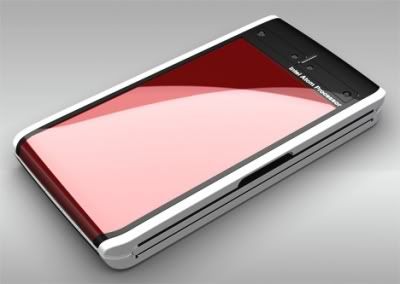
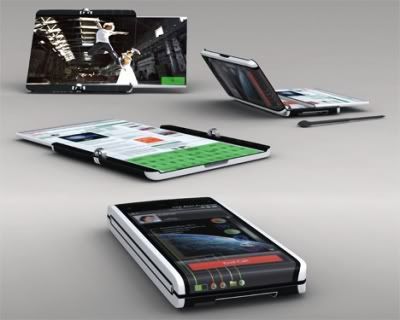
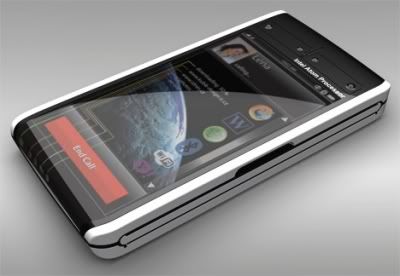
Big screen is always in demand in the mobile phone. Because big screen give you an option to see photos and videos clearly. Now this mobile phone is coming with the folded screens. You can unfold these screen three times and as a result you can see wide and attractive screens.


iPad competitors lining up !! Get ready for next generation Electro War !


Samsung's Galaxy Tab and other Android-powered tablets are looking to take a piece of the tablet action from Apple.
(Credit: Samsung)
Apple's iPad may finally have some competition.
With the gadget, Apple started the craze for building devices that are smaller than notebooks and bigger than standard smartphones, feature touch-screen interfaces, and enable people to browse the Web and download apps. And the iPad took off quicker than most people anticipated, selling 3 million units in its first 80 days. The device is expected to keep tight hold of its market-leading position for at least the next year.
Toshiba's Folio 100, an Android-based tablet, will come in 3G and non-3G versions when it ships later this year in Europe.
(Credit: Stephen Shankland/CNET)
But beginning this fall (with several new devices launching at IFA Berlin last week) and stretching through next year (with the Consumer Electronics Show in early January), there are going to be far more consumer touch-screen tablets to choose from. And not just from small niche manufacturers. Some of the world's largest makers of consumer electronics and PCs are jumping into the fray--companies with the resources (including, in many cases, Google's rapidly proliferating Android operating system) to take on the Apple mobile-device juggernaut.
The big players in the developing tablet race will be familiar: they're many of the same people who are tussling for consumers' dollars and attention in the smartphone realm. As with smartphones, choosing a touch-screen tablet will mean deciding between different operating systems: Apple's iOS, Google's Android, Palm's WebOS, Research In Motion's BlackBerry operating system, and Microsoft's Windows 7--except, in some instances, without having to also decide on a wireless carrier.
Here's a look at some of the iPad's competitors. It's not a comprehensive survey, of course. But it's a good look at the tablets coming from companies with the tech chops and marketing clout to compete with Apple.
Samsung Galaxy Tab is emerging as a top rival to the iPad. Just officially unveiled at IFA Berlin, it's an Android-based touch-screen tablet. At 7 inches, it's smaller than the 9.7 inch iPad, and it's also lighter. The initial reviews of using the tablet have been positive, and it's not an iPad clone. The specs include Android 2.2 (Froyo), Flash 10.1, 16GB or 32GB of memory, GPS, and a gyroscope, accelerometer, and a 3.2-megapixel camera, with autofocus and a flash. 
The biggest difference between the Galaxy Tab and the iPad is that you can buy the device only through a carrier. So, yes, that means there's a phone in the Galaxy Tab. Think of it like a smartphone on steroids, similar to Dell's slightly smaller Streak, which debuted this summer. The cost will be left up to the individual carriers.
The Toshiba Folio also debuted at IFA as an Android tablet ready to take on the iPad. As with Apple's tablet, you don't have to buy it through a wireless carrier, but you do have the option for WI-Fi only or Wi-Fi and 3G. There's a 10.1-inch multitouch screen, an Nvidia Tegra processor, stereo speakers, a 1.3-megapixel Webcam, two USB ports, an SD card slot, an HDMI connector for sending video to other screens, Bluetooth communications, and 16GB of memory. Like the Galaxy Tab, it comes with Adobe Flash 10.1 and Android 2.2.
The price is 399 Euros ($511), but (so far) it's been announced only for Europe.
With the 5-inch Streak, Dell was one of the first major competitors of Apple to bring out a tablet using Android. Thedevice is more of a phone than a tablet, but it's shown that Dell is being aggressive in getting out early in this category. Though the Streak has been reviewed as a solid Android device, its software is already old; the gadget comes with Android 1.6 (whereas most new tablets will hit store shelves with version 2.2).
The Streak is available only in the U.K. and the U.S. In the states you can get it for $299 on a two-year contract with AT&T, or get it unlocked for $549.
The Dell Streak shown in size comparison to the iPhone and iPad.
(Credit: CNET)
The Blackpad, a tablet from Research In Motion, is still a rumor, but it's a pretty solid one. The maker of the BlackBerry is reportedly readying thedevice and intends it as a sort of companion gadget to the BlackBerry--it will come only with Wi-Fi and Bluetooth connectivity options, and for 3G service would need to be tethered to one of RIM's smartphones.
Another report has the device not running the BlackBerry OS at all, instead featuring software from a company called QNX that RIM bought earlier this year. It's not clear whether this device will be ready for consumers this holiday season or sometime next year.
The HP Slate with Windows 7 is supposedly still being worked on by Hewlett-Packard, which announced the gadget at CES in January. While we're not holding our breath for that one, there's another potentially interesting touch-screen tablet coming our way from HP.
The company has been making PC tablets for years, but the reaction from customers to Apple's iPad must have clearly demonstrated the demand for a lightweight, non-Windows tablet. A few months after the iPad's debut, HP went out and bought itself its own mobile operating system. Now it says it's planning to unveil a tablet based on Palm's WebOS sometime early next year. Though very few details are known, the company has filed a trademark on the name PalmPad, which may or may not turn out to be the name of its impending tablet.
Apple's obviously not sitting still either. While hardware updates are likely to come early next year, we also know there will be some significant software updates by November, as Steve Jobs showed us at the company's fall event last week. Wireless printing, AirPlay media streaming, and multitasking will arrive when iOS 4.2 is ready.

Saturday, September 4, 2010

sony's show for latest gadget with new technology :Sony Expo Showcases Latest Tech

The annual Sony Hawaii Expo was held this week at the Ala Moana Hotel Hibiscus
 Ballroom.    Highlight of this year’s Sony Expo was the desktop Sony OLED flatscreen TV (shown above). The hallmark of this high tech wonder is its small size and crystal clear high definition picture. The screen itself is thinner than a compact disc jewel case.

Another hyped product at the Sony Hawaii Expo is the new Sony Rolly MP3 player. It is a new portable device that is shaped like a little barrel and moves to the beat of the music. The speakers on this device are positioned at both ends and open up with winglike flaps on each end. The device will not be marketed in the U.S. and is aimed only at consumers in Japan. If it were sold in the U.S. the price would be at around $400.
The Sony Rolly MP3 player. Sold only in Japan.
Face recognition “smile” technology for Sony Cybershot cameras were also a new this year. The new Cybershots can sense when a person smiles and fires only at that time. People were happily smiling for the demo at the Sony Cybershot booth. There were many other Cybershot digital still and video cameras that were also on display for consumers to play with.
I was most interested in the small super zoom, SLR-like cameras that I may want to get in an effort to find a capable SLR-like digital camera without all of the weight and bulk.
Last year’s hot product, the Sony Playstation 3 was almost like a has-been this year. Yes, there were displays of the venerable Playstation 3 for people to use, but the crowds around those stations were not very big. Sony is still marketing the Playstation 2 which is still the most popular game console of all time, despite Nintendo running away with the market lead on their new generation Wii product.
I am still interested in perhaps getting a Sony PSP, mainly for the fact that it can surf the web with its wireless internet feature. Another wifi device that was touted last year, the Sony Mylo, was nowhere to be seen this year. Sony still sells the device.
HDTV are the big products Sony is pushing this year as the Expo was dominated by flatscreen high definition sets all over the place. Going hand in hand with that were several Sony Blu-Ray HDTV DVD players. the pictures on the sets and from the players are incredibly clear.


People clamor around the latest Sony digital cameras.
Don’t know if I am ready to sink money in either of these technologies, especially Blu-Ray since it is locked in a format war with the rival HD-DVD. Beta vs. VHS all over again. I’ll wait for the dust to settle on this one.
Overall the Sony Expo was a great little venue to check the latest technology from one of the most popular electronic companies on the face of the earth.

from Australia's largest technology trade show: EO ultra mobile personal computer

Lia Timson rounds up the coolest gadgets at the latest technology trade show.


                                                                    Tech heads and early adopters must have had a field day at CeBIT, Australia's largest technology trade show. It wrapped up this week, clearing the way for the latest hardware and software to be embraced by consumers and businesses. Some of the gear is already available, other devices will arrive later this year. Much of it capitalises on the trend toward mobile work.
Among the stars of the show was the ultra-mobile personal computer (UMPC) - between a tablet PC and a personal digital assistant (PDA) - with full PC capabilities at half of the price of a tablet. The new $1650 EO from TabletKiosk is 50 per cent bigger than the average PDA, runs Windows XP and ditches Pocket PC applications in favour of full Windows software versions.
It's handier and lighter than a tablet or laptop and more useful than a PDA, primarily because of its 17cm touch screen. The UMPC will come with hard drives from 30GB to 160GB, and with memory up to 1GB. It is Wi-Fi and internet enabled, but does not have a mobile phone, although we are told one can be connected via Bluetooth.
Hugo Ortega, the principal of Tegatech Australia , distributors of the EO, says demand has already outstripped initial estimates, with 250 units sold in the first two hours of orders opening. It arrives in June.
"From what we've seen, there is demand for digital ink to take notes on the screen and have it transcribed to Word or other [program]," Ortega says. He says it will finally do away with paper notebooks carried around by students and note-taking professionals.
Samsung and Asus also have ultra-mobile PCs on the way soon.
Still on the portable stakes, a new credit card-size USB flash drive has arrived.
The compact Wallet Flash  has a double-sided USB port that sticks out and is small enough to fit snugly with other cards in your wallet.
Gilad Grinbaum, the director of G-Innovations , distributors of the Israeli-developed device, says it is waterproof, and starts from $30 for 128MB of storage.
If you're a mobile worker in tough and secret conditions, Panasonic's Toughbook CF-51 arrives in September. It is water and shock resistant and comes in a magnesium-alloy case. The 80GB hard drive is removable for security, and fingerprint and smart-card readers are optional. The series was designed to meet US military durability requirements.

is it car or fully featured of your gadget?: Mercedes-Benz F500 Concept Car

The F 500 Mind showcases the very latest technology
At the Tokyo Motor Show 2003, Mercedes-Benz presented the latest in a string of research vehicles which have attracted much interest and attention over the years and which provide fascinating insights into the automotive technology of tomorrow and beyond. Packaged as a modern four-door fastback saloon, the F 500 Mind mobile research lab showcases more than a dozen ideas for enhancing the safety, drive technology and comfort of future Mercedes passenger cars.

The DaimlerChrysler researchers will be using this vehicle to conduct the first practical tests of these innovative systems and pave the way for their commercialisation. The raft of innovations extends all the way from the night vision system with infrared laser headlamps to two-way doors and a programmable multivision display in the cockpit. Electronic accelerator and brake pedals, an interior pillar which provides structural rigidity and an ultrasound driver information system are further features being tested by Mercedes-Benz in the F 500 Mind.
For the powertrain, the DaimlerChrysler researchers have developed a high-performance diesel hybrid unit whose NEDC fuel consumption is up to 20 per cent lower than that of a comparable CDI engine. The state-of-the-art V8 diesel engine (184 kW/250 hp) from the S-Class has been combined with a powerful electric motor (50 kW) which is switched on and off by an electronic controller in response to traffic conditions and driving style. The electric motor can take over for example when moving off from rest, in stop-go conditions or in other situations where an internal combustion engine does not operate at optimal efficiency. When the driver demands more power, the V8 internal combustion engine cuts in to provide sharp acceleration. The 300 V battery for the electric motor is located under the passenger cell and is recharged during braking.

With a body length of 5092 millimetres and a wheelbase of 2965 mm, the F 500 Mind offers a significant gain in legroom in the rear compared with a conventional present-day saloon in this class. This was made possible by using innovative-design electronic accelerator and brake pedals which take the form of pressure-sensitive surfaces. Sensors in these “pedals” transmit the driver’s commands to the engine and SBCô brake system by means of electrical impulses. The technology takes up much less room than conventional mechanical pedals, increasing the length of the front footwell by 120 millimetres. The driver’s and front passenger’s seats can therefore be positioned further forward, so providing more space for the rear passengers. The steering, too, is controlled electronically.

Intelligent door-opening technology allows the doors to be opened in two different ways: either conventionally (both doors open forwards) or from the centre (centre-opening). In the latter mode, the B-pillar stump moves backwards with the rear door to provide a 1900 mm-wide opening for occupant entry and exit.

In the absence of full-size B-pillars, which would normally provide the all-important structural rigidity and side impact protection, the Stuttgart engineers came up with an innovative interior pillar which provides exemplary rigidity and typical Mercedes standards of occupant safety. The pillar is located in the middle of the vehicle towards the rear, and connects the reinforced floor pan to the roof structure. It also houses the air-conditioning ducts and interior lighting units.

The multivision display in the cockpit of the F 500 Mind forms the centrepiece of an innovative instrumentation and control system which offers the driver more flexible information delivery and at the same time reduces fatigue. The dials and displays in the instrument cluster are programmable and their images can be optically superposed or combined with the aid of a semitransparent mirror. In this way the driver can call up a wide range of information at the push of a button on the steering wheel. The information is always displayed directly in the driver’s field of vision where it can be seen easily and will not distract him. A further display, the central display unit, is situated above the centre console. It is linked to a touchpad whose surface is divided up in exactly the same way as the surface of the central display. By briefly touching it, the driver can control the navigation system, radio, air conditioning, telephone and other systems.

Further switches and keys in the vehicle are equipped with special sensors which can detect the driver’s approaching hand even at a distance of several centimetres. They then immediately call up the relevant function in the central display, for more convenient operation.
An advanced-design voice control system and an ultrasound-based driver information system take convenience even further. The ultrasound technology targets the sound at the driver so that only he or she can hear the information from the navigation system, the traffic news and other sound-based information sources, while the front passenger and rear passengers remain undisturbed.


In the dark or in poor visibility, the innovative night vision system projects its images onto the right-hand display. The night vision system consists of two infrared laser headlights on the front of the vehicle which “illuminate” the road with their invisible light over a range of up to 150 metres. The light reflected back from other vehicles, cyclists or pedestrians to a camera mounted on the front windscreen of the F 500 Mind is projected in black and white onto the multivision display. This allows the driver to spot hazards much earlier than in a vehicle operating on conventional dipped headlamps, which have a range of only about 40 metres. Thus Night Vision offers further opportunities for making night driving safer.
As a mobile research lab, the F 500 Mind is equipped with a special “laboratory bench” which folds out towards the rear. This allows a researcher sitting in the back of the vehicle to monitor and control the vehicle systems during testing on the proving grounds and to carry out measurements. For example the researchers are planning to use this fascinating vehicle for intensive user acceptance-testing of the innovative instrumentation and control system and for further practical testing of the diesel hybrid drive system and the Night Vision system.
Related Posts with Thumbnails