chitika1

chitika

Showing posts with label 3g. Show all posts

Tuesday, October 12, 2010

Bypass LTE and include dual-mode GSM/CDMA: Next generation iPhone Apple

In starting of  2011 Apple launch for the CDMA(Code division multiple access) iPhone, a new report adds a bit of a twist to this oft mentioned handset. This latest report suggests that both the rumored Verizon iPhone and Apple’s 5th next generation handset will not incorporate with LTE technology. Rather than LTE, As I know Apple’s fifth generation handset may be with  dual-mode GSM/CDMA device that is capable or operating on multiple carriers. 
the one thing important in all discussion is that Apple is not interested in producing an LTE (Long Term Evolution) device while the technology is still nascent. Apple will eschew the brand new LTE technology and will still stick with the older and more reliable GSM, HSDPA, and EV-DO technologies. I mean Why? Why Apple will do this ? I don't know actually what is going to do Apple? Apple won’t tarnish its reputation by being a guinea pig for wireless carriers that are launching these new networks. Before some time Apple made a similar move when it launched the iPhone with EDGE, instead of 3G connectivity which was available at the time of the smartphone’s launch. Apple made a deliberate decision to stick with the reliable EDGE technology and waited for 3G to mature before incorporating it into the iPhone 3G. that's the great thing Apple is going to do. But I don't know what is the main aim for that? 
Before some time taking a step to this impending shift from 3G to 4G presents a major inflection point in the reign of the iPhone franchise. Does Apple move to 4G right away, or do they wait for the network to mature? Recall that Apple waited to support 3G for one entire cycle, opting to release the original iPhone on AT&T’s mature 2.5G EDGE network, despite wide availability of 3G by early 2007. Other discussion will be continued after some time when Apple launch this I-phone after this new technology LTE with old GSM/CDMA.

But now, Here AT&T is so important word. Let me know you about it. 
What is AT&T?:
AT&T Inc. is the largest provider of fixed telephony in the United States, and also provides broadband and subscription television services. AT&T is the second largest provider of mobile telephony service in the United States, with over 85.1 million wireless customers, and more than 210 million total customers.
As of 2010, AT&T is the 7th largest company in the United States by total revenue, as well as the 3rd largest non-oil company in the US (Behind Walmart and Bank of America). It is the 3rd largest company in Texas by total revenue (Behind ExxonMobil and ConocoPhillips) and the largest non-oil company in Texas. It is also the largest company headquartered in Dallas. In 2010, Forbes listed AT&T as the 13th largest company in the world and the 8th largest non-oil company in the world, the largest company in the world not associated with banking or oil, as well as the world's largest provider of telecommunication.

On that basis of AT&T check out this link: www.att.com

Monday, September 27, 2010

4G & the Dawn of Service-based Pricing

As you know technology is going on thw way at its own increasing speed! Now a days you already know about 3G technology, that was unknown for some days. And now there is a new technology that's called 4g technology. If you want to know about 4G technology check out this articles about 4G technology here

Now I will talk about issue on 4G technology pricing.The Coming Wireless Broadband Revolution
It is clear that wireless broadband or 4G has the potential to significantly change the way we live and work — possibly even to the same extent that the mobile phone has changed the way billions of people live and work today.

To really drive growth in 4G wireless broadband usage, and to maximize the opportunity for 4G revenue, service providers should consider treating their 4G networks as "service pipes" over which they can make a wide range of services available to the end users — from tiered packages of “service channels” to one-time, pay-as-you-go offerings. In concert with this strategy, as demand for new 4G services grows, the smooth delivery, configuration, security and management of a wide range of services on every single 4G-capable device will become increasingly key to the success of the 4G service offerings. This means that the service enablement and device management platform will become a critical success factor in the launch of 4G networks and services.


As I said to make life faster  service provide has to make this service valuable at low price. so, hope in just some days you would have 4g technology in your palm at low price.

Friday, September 17, 2010

HTC Desire HD and Desire Z Unveiled

credit: HTC
HTC has finally revealed the next generation of Android Smartphones, named as HTC Desire HD and HTC Desire Z, both of them will be featuring Android 2.2 OS with HTC Sense UI running on top of it. HTC Desire HD is basically the HTC EVO 4G minus front facing camera and 4G, it has got the same 4.3 inch capacitive touchscreen, 1 GHz Snapdragon processor, 8 megapixel camera, dual-flash and sports impressive unibody design.


HTC Desire Z on the other hand features 3.7 inch capacitive touchscreen, 800MHz processor and 5 megapixel camera, it also has a slide out QWERTY keypad for easier typing.

Both of the HTC Android Smartphones support 720p video recording and playback capability along with HTC Fast Boot that reduces the time needed to make a call or for checking email.


 HTC Desire HD and Desire Z Release Date

October 2010, exact date to be announced later.

HTC Desire HD and Desire Z Price

To be announced later.

Tuesday, September 14, 2010

Verizon gets BlackBerry Curve 3G, too

BlackBerry Curve 3G for Verizon Wireless
Now that T-Mobile has had the BlackBerry Curve 3G for a week, it's time for Verizon to get in on it as well. The 3G version of the popular BlackBerry Curve (model 9330) will finally head to Verizon Wireless. It has a slightly tweaked design--a mirror-finish trim, soft-touch sides, and a textured back--but the full QWERTY keyboard remains largely the same. You also get the same media keys on the top. Features include 512MB of flash memory, a microSD card slot that can support up to 32GB cards, GPS with VZ Navigator support, Wi-Fi, camera with video recording, and support for BlackBerry App World.


Though the Curve 3G comes with BlackBerry OS 5, it is upgradable to OS 6. It will be available in business sales channels September 16, and online and in retail stores in the coming weeks for the low price of $29.99 after a $100 mail-in rebate and a new two-year service agreement. The phone requires an e-mail and Web feature plan.

Friday, September 10, 2010

Next after 3G: 4G Technology

Fourth Generation (4G) mobiles

4G also called as Fourth-Generation Communications System, is a term used to describe the next step in wireless communications. A 4G system can provide a comprehensive IP solution where voice, data and streamed multimedia can be provided to users on an "Anytime, Anywhere" basis. The data transfer rates are also much higher than previous generations.

The main objectives of 4G are:


1)4G will be a fully IP-based integrated system.

2)This will be capable of providing 100 Mbit/s and 1 Gbit/s speeds both indoors and outdoors.

3)It can provide premium quality and high security.

4)4G offer all types of services at an affordable cost.

4G is developed to provide high quality of service (QoS) and rate requirements set by forthcoming applications such as wireless broadband access, Multimedia Messaging, Video Chat, Mobile TV, High definition TV content, DVB, minimal service like voice and data, and other streaming services.

4G technology allow high-quality smooth video transmission. It will enable fast downloading of full-length songs or music pieces in real time.

The business and popularity of 4Gmobiles is predicted to be very vast. On an average, by 2009, this 4Gmobile market will be over $400B and it will dominate the wireless communications, and its converged system will replace most conventional wireless infrastructure.

Data Rates For 4G:


The downloading speed for mobile Internet connections is from 9.6 kbit/s for 2G cellular at present. However, in actual use the data rates are usually slower, especially in crowded areas, or when there is congestion in network.

4G mobile data transmission rates are planned to be up to 20 megabits per second which means that it will be about 10-20 times faster than standard ASDL services.

In terms of connection seeds, 4G will be about 200 times faster than present 2G mobile data rates, and about 10 times faster than 3G broadband mobile. 3G data rates are currently 2Mbit/sec, which is very fast compared to 2G's 9.6Kbit/sec.

new phone with new technology: HTC Touch Pro 2


With every new product that HTC launches in the market, it is increasing its stronghold in the market of phones. HTC has always catered to a large client base and there is a phone for every kind of user, from the Multimedia to the Business, you name it and they have it. Well unveiling the latest in this series is the HTC Touch Pro2. Well all of us remember when HTC took the market with a storm when the HTC touch procame out. Well the HTC Touch Pro2 has had a better response. The philosophy behind the product is that business is based on communication and this power packed device has more than just the goods to give the right boost to your business.

It has the much useful QWERTY keyboard that slides out and has spacious keys, the screen can be tilted to the right degree in order to provide you the clearest viewing experience, the screen is touch sensitive and 3.6 inch diagonally, and other features like zoom bar to zoom in and zoom out of pictures with efficiency and ease. Like the other phones, this one too has the Windows Mobile Platform and weighs less than 180 grams including the battery. It is just the phone you had been waiting for.

Thursday, September 9, 2010

news about apple: Apple bows to pressure, makes nice with developers


Apple's battle with developers might be heading toward a truce.
The company plans to allow developers to create applications with just about any tool they want. It will also publish its App Store Review Guidelines.
The changes could also mark a shift in Apple's contentious relationships with both Google and Adobe Systems.


Saying that it has "taken [developer] feedback to heart," Apple has decided to relax "restrictions we put in place earlier this year" on the company's iOS Developer Program license. Going forward, developers can use any development tool they want to build iOS apps, "as long as the resulting apps do not download any code."
In a statement issued Thursday morning, Apple explicitly mentions that the changed portions of its developer license are sections 3.3.1, 3.3.2, and 3.3.9. Section 3.3.1 said prior to the change that "applications may only use documented APIs in the manner prescribed by Apple and must not use or call any private APIs." It also required all apps to be originally written in Objective-C, C, C++, or JavaScript, dealing a blow to Adobe's Creative Suite 5 platform.


Section 3.3.2 required that no application "launch other executable code by any means, including without limitation through the use of a plug-in architecture, calling other frameworks, other APIs, or otherwise."
Section 3.3.9 put the squeeze on Google's AdMob by limiting an application's ability to "collect, use, or disclose to any third party, user or device data without prior user consent." Advertisers could share user data only if "the collection, use or disclosure is for the purpose of serving advertising to your application."
In addition, Apple said Thursday that it plans to publish its App Store Review Guidelines "to help developers understand how we review submitted apps." The company said that it's publishing the guidelines in an effort to be "more transparent."
Apple's decision to post review guidelines has been a long time coming. For years, the company has been approving certain apps, while not allowing others into its App Store without, according to the developers, adequate explanation. Until now, Apple has been firm in its stance.
Earlier this year, Apple updated its iOS 4 SDK with provisions that prevented developers from using tools such as Adobe Creative Suite 5 to port applications to the iPhone. Now, those tools can be used, as long as code isn't downloaded.

Tuesday, September 7, 2010

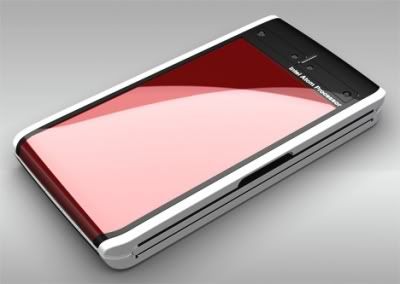
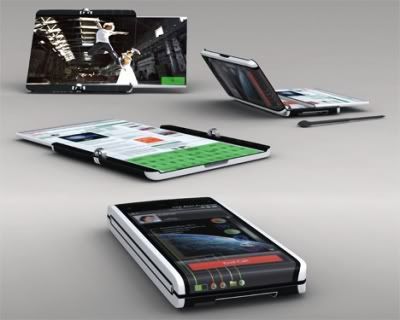
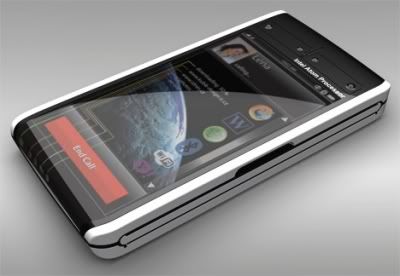
Can you fold your mobile? : New Triple fold screen mobile phone

New Triple fold screen mobile phone


Big screen is always in demand in the mobile phone. Because big screen give you an option to see photos and videos clearly. Now this mobile phone is coming with the folded screens. You can unfold these screen three times and as a result you can see wide and attractive screens.


Thursday, August 26, 2010

10 new technologies that will revolutionise your life !

Staying up to date with everything that's going on in PCs and tech is almost impossible, so these are the ten technologies that you should be most aware of, as they're the ones that'll make the biggest difference to your life.
1. 3D gaming
The fact that to get any kind of 3D image from a 2D screen means wearing a pair of sunglasses or worse means that three dimensional gaming isn't quite as convincing as multitouch and natural user interfaces, even though the two have been commoditised at almost the same time.
An Acer Aspire 5738 laptop with a 3D display costs about £550 at the moment, not bad for something with cutting edge technology that adds depth to any DirectX 9 game. The screen is of the polarised filter type, which is the new norm for extra dimensions.


Instead of using coloured filters splitting an image into two – one for each eye – the vertical pixel columns are alternated between left image and right image and shone through a piece of polarised glass. A pair of dark glasses with oppositely polarised lenses ensures that only one image is seen by each eye. The difference to a game is tangible too, something like WoW runs and looks incredible on the low-end graphics hardware.
It's over in TV land that the real push for 3D is happening, though, as LCD suppliers ask us to upgrade again to watch hyper-real cinema in the lounge. Compared to the other technologies we've talked about here, though, 3D requires a lot of effort on behalf of the watcher (those pesky glasses) and most of us are very lazy; hence the ubiquity of MP3 and standard definition movies, while Blu-ray and higher resolution sound standards continue to flounder. We value ease of use over quality every time.

In its favour, 3D doesn't actually require any work on behalf of games developers or publishers, as the stereoscopic image is created at the driver level. On the other hand, that means there's no massive push by the people who make and sell games to encourage us to adopt it.
2. Streaming games
The advancements in superfast broadband hasn't just helped the cause of downloadable games. It will also have no some small impact on the future of streaming games over broadband, or at least that's the theory.
There are several companies pursuing and a significant amount of money invested in the idea that one day, your precious PC will be almost entirely redundant as a games machine.
The concept is simple: all the game's data is hosted on a central server and all you will have to do is receive the display and send back input commands. It's a little like the technology used for MMORPGs, except that the rendering engine isn't on your PC, it's actually in the same server farm as the core intelligence.
This idea was actually mooted some years ago with the Phantom console, which never made it to the stores. It's looking unlikely that OnLive (www. onlive.com), Gaikai and Microsoft's own streaming project will end up as vapourware though, despite the obvious concerns about input lag: the delay that occurs every time you press a key. The signal has to travel hundreds of miles before a character even moves.
Proponents say that even twitch gaming FPS games are possible but we're a little more sceptical. There's another reason that at least one of these services will be properly launched soon, and that's vested interest by games publishers.
Because no content is stored on your machine, of course, it's impossible to pirate a streamed game, which is obviously an attractive proposition for them. In the immediate future, though, it is more likely to be a technology that runs like games such as Quake Live, which use a combination of some local processing power and some server-based cycles. That's certainly the route Microsoft is taking, and seems more achievable than relying on 'the cloud' at this stage.
3. Six-core processors
You won't have to wait long for this one. Intel's Westmere CPUs may be hanging around with the dregs of processor society at the moment, chucking their chips in with the integrated graphics crowd, but they're about to grow up – and fast.
Sometime over the next few months Intel will go two better than the current line up of quad-core CPUs by launching a six-core version of its high-end Core i7 line. Based on the existing Nehalem architecture, the headline feature is a process shrink down to 32nm, while the rest of the spec sheet remains largely the same. It could be a genuine upgrade.

Games programmers are getting much better at working with multithreaded code so that most major titles, like Empire: Total War and its forthcoming sequel Napoleon, will see a much bigger performance increase when given extra cores to play around in than the often sporadic leaps in frame rate we saw going from two to four cores.
Because the benefits will be in the amount of cores, rather than the speed of things you can do at once, Intel are encouraging some developers to add extra content specifically for people with a six-core CPU. Given the plethora of disappointments we've had lately with almost every technology that's promised to increase our frame rates, we'll reserve judgement until we have one in the office.
The good news is that these hexa-powered processors will fit into most existing X58 motherboards after a simple BIOS flash. The bad news is X58 motherboards are still very expensive too.
4. Wireless power
A few years ago we saw a demonstration by a team at Fulton Innovation of a product called eCoupled. Using the principle of electromagnetic induction, by which an electrical charge can be stimulated in a wire coil by placing another one nearby, the crazy boffins were able to display wireless power transfer.
Despite being high voltage, they said, it was safe, efficient and could be applied to any surface. The demo room consisted of a kitchen without plugs, but full of lights that could be stuck anywhere and a frying pan that heated up just by sitting it on the counter. Put a phone on the same counter and it began charging. Clearly, this was the future.


Fulton are still working on wireless power, but it's a different company that's beat it to the shops, Powermat – and its products are expensive for something that replaces a 50p mains plug.
The good news is that the Wireless Power Consortium are going to be finalising a standard for wireless power called Qi later this year, which should mean prices drop and manufacturers have the confidence to build the technology straight into devices, rather than requiring an adaptor.
If you think that's crazy, though, take a look at Airnergy by RCA. It's a tiny dongle that can turn Wi-Fi signals back into electricity for charging phone batteries and the like.
5. Wireless displays
The last two standards for monitors, HDMI and DisplayPort, didn't exactly have us all rushing out to upgrade our PC screens and graphics cards, so it's a safe bet that DVI will remain the cabled interface of choice for some time to come. What about connecting a monitor to your PC without wires though?
That's something that could be worth shelling out for. Two different technologies were on the show floor at CES, which should be available en masse this year.
The first, WirelessHD is being pushed by the usual line-up of TV and DVD player manufacturers as a replacement for HDMI. It uses a short range, high bandwidth in the Ultra-Wide Band (UWB) spectrum to transmit HD video and audio from a set-top box or media centre to a TV screen.
The idea is nothing new, Philips have had a kit out for a while that does the same thing, but WirelessHD is a proper standard and should ensure maker A's TV works nicely with maker B's Blu-ray machine and so on.
Perhaps more relevant for us, though, is Intel's new Wireless Display, or WiDi. It's designed specifically for laptops in order to remove the hassle of cables when you want to dock them with a proper screen, and like WirelessHD sends the video signal to a receiver box.
Unlike WirelessHD, WiDi can't handle protected content and the like, but it is much simpler since it requires no new hardware inside the laptop. Instead of using a separate transmitter, WiDi is a software layer on top of the existing Wi-Fi chip, so it's much cheaper to produce. Providing there's no latency introduced to the picture refresh rate, this could be a killer.


6. OLED displays
Yeah, we hear you. Another year, another promise that OLED screens are going to take over. Haven't we heard it all before? Except this time it could be true.
Google's Nexus phone has just launched with an OLED screen, and by all accounts it makes the handset almost – say it in hushed tones – more desirable than the iPhone. Brighter colours, sharper resolutions, darker blacks, whiter whites; why is this OLED technology so superior?
Put simply, it's because instead of filtering the light from a white or blue lamp behind the screen, each pixel in an OLED panel produces its own light. You don't have to be an optometrist to see why this is better, but it is much more expensive to produce.
Still, it also means OLED screens are much thinner than backlit ones, for obvious reasons, and while you may not be using an OLED PC monitor by the end of the year there are a lot more laptops with the technology arriving.
7. Superfast broadband
There are two things about broadband you should be concerned about. The first is whether or not the Digital Britain report, with its three strikes policy, outrageous invasion of privacy and extra charging for bandwidth, makes it into law before the general election final hits.
The second is what's going on at your exchange. By early next year, 75 per cent of us should be living in proximity to a telephone exchange that has a fibre optic connection to the internet. It's all part of BT's 21CN project to replace the entire copper telephone and broadband internet infrastructure with a single ethernet-based network fit for the 21st century.

So far, it's been dogged by delays and problems, but it's finally picking up the pace and is being tested by ISPs all over the country. The idea is that it will increase competition for high-speed broadband and bring down access prices, as well as bring services like IPTV – of the sort Virgin customers enjoy – to everyone.

It doesn't just mean better access to large downloadable game files and lower ping times, however. Our biggest hope is that it will eventually encourage telephone companies to do away with the irritating £12 a month line rental charge for a phone we don't actually use.
8. Augmented reality
Actually, we're kidding ourselves with this one. Augmented reality: the ability to overlay information on a live video feed of the world, is very cool, and it's impossible not to love iPhone apps like Yelp that pull in details and distances to the nearest pub or restaurants as you point the camera in their general direction.
Holding your phone three inches in front of your face as you're walking around feels a little too ridiculous to catch on, though. Perhaps it's like handsfree and Bluetooth headsets. Not so long ago people still sniggered if they saw someone using a phone without holding it to their ear, and not so long before that mobile phones themselves were devices for sales dorks.
Augmented reality
In a couple of years time, it may seem the most natural thing in the world to see someone walking around with a phone held at arms length, directing them to food or drink with their own personal dynamic GPS system, or pulling up interesting information about the buildings and people in front of them. Yes, that's right, people.
Twitter 360 is an iPhone app that directs you to geotagged tweeters on your friends list, while TAT (www.tat.se) is working on an Augmented ID program, so if people point a camera at you various bits of information from your social feeds floating around your head. Makes stalking a lot easier then. Scary.
9. Natural user interface
In his CES keynote presentation, Steve Ballmer made several references to the 'Natural User Interface' (NUI), which is a handy catch all to describe all the Wii wand-waving, multitouch point and Project Natal-style aerobics that are catching headlines out there.
The keyboard and mouse is by no means dead, but the sudden flood of cheap laptops and all-in-ones with a built-in, multitouch screen suggests that it won't be long before we'll all have something a little bit different on our desktops.
Over in the US, for example, custom laptop maker IBuyPower has already started selling high-end gaming notebooks with a multitouch screen, and French developer, Eugen Systems has incorporated Win7's multitouch controls into the heart of its forthcoming strategy title R.U.S.E. It's all very exciting, except for one thing.
Multitouch may be native to Win7 and no other operating system, but the implementation is nowhere near as smooth as it is on, say, the iPhone. PCFormat has yet to use a multitouch application on a PC that doesn't suffer from a bit of inaccuracy or sluggishness, and the key to the NUI is in the first word. It has to feel natural, unforced and invisible to the end user. That's what using multitouch on an iPhone is like, and that's what Windows must achieve. If the mouse remains faster and more trusted, that's what people will use.
There are some brilliant ideas out there, though. Project Natal, Microsoft's full body 3D gesture recognition system for Xbox 360, is by far the most ambitious prototype, and we can't wait for a PC hack.
At CES the prototype Light Touch projector, from Light Blue Optics (lightblueoptics.com), was a show stealer. Using a technique called holographic laser projection, this tiny projector turns any 10inch surface – flat or curved - into a sharp multitouch screen.
10. Long-term evolution
The idea of getting high speed, super-reliable mobile broadband from a cell tower to your laptop or phone via WiMAX is not quite dead in the water, but it's certainly in need of a bit of mouth to mouth.
Far from being the 'Next Big Thing' as it was touted a few years back, it's had a painful and traumatic incubation period, which has seen some US carriers begin to adopt it and, in fact, quite a few businesses use it for point to point communications, but public access has dwindled from trial areas to almost nothing.
Partly, this may be because the company which owns the licence to operate WiMAX licences in several cities, Freedom4, was recently bought out and the new owners aren't in any rush to monetise the technology. More likely, it's because the mobile phone companies are happy with the current HSPDA speeds and are betting on an alternative technology, which is known as 4G, or Long Term Evolution (LTE) to supply almost the same amount of bandwidth without completely reworking their networks for WiMAX.
Lucky Scandinavians living in Stockholm or Oslo with a TeliaSonera contract can already sign up for LTE, while O2 is planning on launching a 150Mbps LTE package in the UK some time this year. We don't expect WiMAX to give up without a serious fight, though.
In the US, mobile networks are beginning to fall over because of the volume of 3G traffic running over them, and WiMAX's new architecture could well be a way to increase capacity to cope with demand. In which case, expect to see it begin sprouting up everywhere.
Faster bits and bytes
Rather more prosaic than the technologies listed elsewhere in this article the internals of your PC are also being overhauled by the powers that be. There's a revision to the SATA standard out for disk drives, and USB 3.0 is appearing on motherboards to speed up the default peripheral connection.
They are big steps forward. SATA III doubles the bandwidth available to storage from a theoretical 3Gbps to 6Gbps, while on paper USB 3.0 is a ten-fold increase from 480Mbps to 4.8Gbps for cabled peripherals.
motherboardsMotherboards sporting ports of both flavours are already available from most manufacturers. Although both technologies are much faster than their predecessors, neither is likely to have a huge impact on consumer PCs.
In the world of business where milliseconds are money, the upgrades may mean something, but for the likes of us, compatible drives and peripherals will be a while coming yet.


Google makes it official: Phone calls now in Gmail !


Gmail isn't just about e-mail anymore: it's also a phone.
(credit:google voice blog)
Google launched the ability to make voice calls to any traditional phone number from a Gmail account Wednesday, which CNET had reported Tuesday was in testing. It's a blend of Gmail and Google Voice technology that allows users to dial numbers from their computers as well as receive incoming calls through one's Google Voice number.
Gmail users can link their Google Voice accounts with their Gmail accounts to have their in-boxes treated like just another line that will ring when people call their Google Voice numbers, and their Google Voice number will appear on the incoming call screen of those they are calling. A Google Voice account isn't required to use the service, but international calls will be funded through Google Voice accounts.
Calls to phone numbers in the U.S. and Canada will be free, and will cost 2 cents a minute to several other countries such as France and the U.K. The service should be rolling out to Gmail users in the U.S. on Wednesday, with international availability coming at an unspecified later date.
In a blog post announcing the feature, Google would only commit to offering free calls in the U.S. and Canada through the end of the year. Google's Craig Walker, product manager for real-time communications, said the company had no plans to raise rates beyond 2010, but it is still waiting to see if it will make enough margin on international calls to justify the free cost of U.S. and Canada calls. It will cost a little more to call mobile phones in countries outside the U.S., depending on the country.
Google Apps customers won't see this function just yet, no doubt disappointing some small-business customers looking to eliminate their phone bills. However, Google played it coy as far as plans for bringing out a business-friendly version of this technology, saying it wasn't ready as of yet but that it was interested in providing such a service.
The obvious target for such a service is Skype, the most well-known VoIP provider in the world with 124 million active users each month, according to data it released along with plans to raise money through an initial public offering. Google wouldn't confirm exactly how many Gmail users there are at present, only to say it was in the "hundreds of millions" according to Gmail product manager Todd Jackson.
However, Google has no plans to make this service available on mobile devices at the moment, which is an advantage for Skype and other VoIP companies. There are dozens of other mobile VoIP apps--including Skype--inside both Apple's App Store and the Android Market, although mobile VoIP is still a relatively new technology with performance problems from time to time. Google CEO Eric Schmidt has talked many times this year about the importance of developing applications for mobile devices, however, so it's not a stretch to assume Google is working toward making this feature available through either mobile browser or an Android application.
Google plans to promote the new service by installing Google Voice phone booths in various airports and universities around the U.S., where people will be able to step into the booths and make free phone calls.(bt cnet)

Tuesday, August 24, 2010

How WiFi Works ?

If you've been in an airport, coffee shop, library or hotel recently, chances are you've been right in the middle of a wireless network. Many people also use wireless networking, also called WiFi or 802.11 networking, to connect their computers at home, and some cities are trying to use the technology to provide free or low-cost Internet access to residents. In the near future, wireless networking may become so widespread that you can access the Internet just about anywhere at any time, without using wires.
 

                               WiFi has a lot of advantages. Wireless networks are easy to set up and inexpensive. They're also unobtrusive -- unless you're on the lookout for a place to use your laptop, you may not even notice when you're in a hotspot. In this article, we'll look at the technology that allows information to travel over the air. We'll also review what it takes to create a wireless network in your home.

A wireless network uses radio waves, just like cell phones, televisions and radios do. In fact, communication across a wireless network is a lot like two-way radio communication. Here's what happens:
  1. A computer's wireless adapter translates data into a radio signal and transmits it using an antenna.
  2. A wireless router receives the signal and decodes it. The router sends the information to the Internet using a physical, wired Ethernetconnection.
The process also works in reverse, with the router receiving information from the Internet, translating it into a radio signal and sending it to the computer's wireless adapter.
The radios used for WiFi communication are very similar to the radios used for walkie-talkies, cell phones and other devices. They can transmit and receive radio waves, and they can convert 1s and 0s into radio waves and convert the radio waves back into 1s and 0s. But WiFi radios have a few notable differences from other radios:


  • They transmit at frequencies of 2.4 GHz or 5 GHz. This frequency is considerably higher than the frequencies used for cell phones, walkie-talkies and televisions. The higher frequency allows the signal to carry more data.
  • They use 802.11 networking standards, which come in several flavors:
    • 802.11a transmits at 5 GHz and can move up to 54 megabits of data per second. It also uses orthogonal frequency-division multiplexing(OFDM), a more efficient coding technique that splits that radio signal into several sub-signals before they reach a receiver. This greatly reduces interference.
    • 802.11b is the slowest and least expensive standard. For a while, its cost made it popular, but now it's becoming less common as faster standards become less expensive. 802.11b transmits in the 2.4 GHz frequency band of the radio spectrum. It can handle up to 11 megabits of data per second, and it uses complementary code keying (CCK) modulation to improve speeds.
    • 802.11g transmits at 2.4 GHz like 802.11b, but it's a lot faster -- it can handle up to 54 megabits of data per second. 802.11g is faster because it uses the same OFDM coding as 802.11a.
    • 802.11n is the newest standard that is widely available. This standard significantly improves speed and range. For instance, although 802.11g theoretically moves 54 megabits of data per second, it only achieves real-world speeds of about 24 megabits of data per second because of network congestion. 802.11n, however, reportedly can achieve speeds as high as 140 megabits per second. The standard is currently in draft form -- the Institute of Electrical and Electronics Engineers (IEEE) plans to formally ratify 802.11n by the end of 2009.(by howstuffworks)

Related Posts with Thumbnails