chitika1

chitika

Showing posts with label battery. Show all posts

Saturday, September 18, 2010

Jawbone Icon brings battery meter to BlackBerrys

One of the benefits of the Aliph Jawbone Icon is that if you pair it with an iPhone you can see the headset battery meter next to the iPhone's. Now BlackBerry owners have the icon as well. Just pair and connect the Jawbone Icon to your BlackBerry and you'll see the Icon's battery meter. To get this new functionality, you'll have to get it from Jawbone's MyTalk Web site under the "Mobile Apps" tab.
The Jawbone Icon comes in six designs, and you can customize it with a variety of "apps" and sound profiles, which is unique for Bluetooth headsets. We rate the Icon favorably and it costs about $99.99, though you can get it for cheaper if you shop around.

Wednesday, September 15, 2010

Tesla to supply batteries for Daimler E-Cell EV

Boosting its activity in electric vehicles, Daimler plans to start producing an all-electric sedan for Europe this fall that uses batteries from Tesla Motors.
Daimler is expected to launch an electric version of its entry-level line called the A-Class E-Cell at the Paris Auto Show next month, according to reports.
Daimler will start manufacturing 500 units of the A-Class E-Cell this fall in Germany for the European market, according to a company representative. The company has not yet decided whether it will be offered in the U.S., she said.
Daimler's planned EV line-up includes the Smart ForTwo Electric Drive, A-Class E-Cell, and the F-Cell fuel cell vehicle.
(Credit: Daimler AG)
The car will have a range of over 124 miles. Tesla will supply the lithium-ion battery and charger for the car, according to Daimler.
Tesla engineers purchased an A-Class in Europe and built an electric-version prototype, which helped speed up introduction of the E-Class, Tesla told The New York Times last month. Daimler invested in Tesla in 2009 and is a corporate partner.
Tesla's batteries will also appear in an electric version of the RAV-4 which Toyota plans to debut at the 2010 Los Angeles Auto Show, Toyota said on Monday. It plans to have an electric vehicle for the U.S. market in 2012.
Daimler's push into electric vehicles is being accelerated by European targets to reduce CO2 emissions from vehicles. "We won't be able to meet the target of 95 grams CO2 in 2020 without electric vehicles with batteries and fuel cells," Daimler head of research Thomas Weber told Reuters.
In the U.S., Daimler plans to offer an electric version of its mini car, the ForTwo Electric Drive, for lease starting next month. Like other automakers, Daimler is primarily targeting its electric vehicles at fleet buyers because of the higher upfront cost.

Friday, September 10, 2010

MOVE OVER HYDROGEN, MAKE WAY FOR MAGNESIUM POWER

Magnesium burns as a white hot flame in fireworks.
  •      Magnesium could work better than hydrogen in fuel cells.
  •      There's enough magnesium in seawater to provide energy for 300,000 years.

 "When people talk about alternative energy, hydrogen often comes up. How about magnesium? We’ll see. Today, on Engineering Works! Listen to the podcast."


Magnesium is nifty stuff. Pure magnesium is a silvery metal, and you probably remember from high school chemistry that it burns with a hot white flame.


While a lot of research has already gone into using hydrogen to store energy, either directly as a fuel or as part of fuel cell systems, some researchers think we should be looking at magnesium as a way to store energy. Magnesium stores about 10 times as much energy as hydrogen. And there’s enough magnesium in seawater to provide energy for 300,000 years


Engineers at a Canadian company are working on a fuel cell that uses magnesium, air and water to produce electricity. An Israeli researcher has come up with a magnesium-based battery sort of like the rechargeable lithium-ion batteries we all know about. And a California researcher is working on a way to use magnesium to produce hydrogen for fuel.

All of this sounds good, but there’s a problem. It takes a lot of energy to purify magnesium to a form we can use. Maybe more than we’d get back. One researcher in Japan thinks he has the answer: solar energy to power a laser that would give us the almost 6,700° F. heat needed. We’ll see how that turns out.

Our magnesium power is somewhere in the future, so we’re done. See you next time.

Engineering Works! is made possible by Texas A&M Engineering and produced by KAMU-FM in College Station.


Tuesday, September 7, 2010

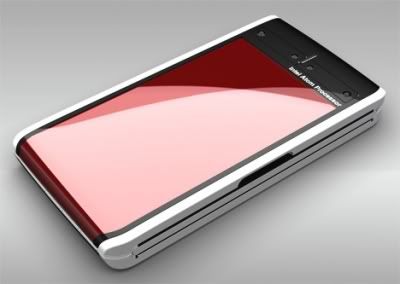
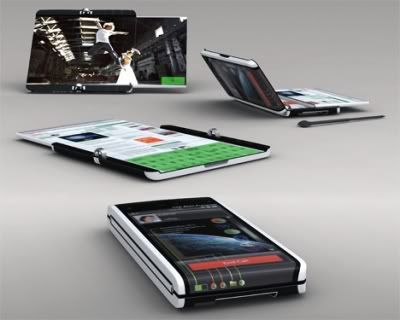
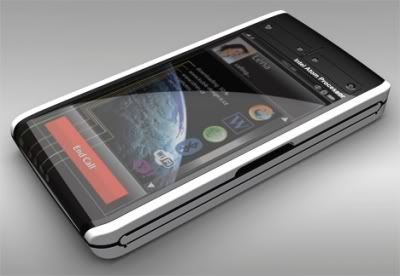
Can you fold your mobile? : New Triple fold screen mobile phone

New Triple fold screen mobile phone


Big screen is always in demand in the mobile phone. Because big screen give you an option to see photos and videos clearly. Now this mobile phone is coming with the folded screens. You can unfold these screen three times and as a result you can see wide and attractive screens.


Focus EV to Use Liquid thermal Battery control !

Focus Electric
(Credit: Ford Motor)
Owners of the new Ford Focus Electric won't have to worry about going out to warm up the car before driving on a winter's day, the car will warm up its battery pack automatically if left plugged in.
Ford announced Thursday its Focus Electric, due out next year in the U.S., will contain a lithium ion battery pack with a liquid-based thermal management system.
In addition to keeping the car's battery within a preferred temperature range while engaged, the system also kicks in to cool or warm the car's battery pack as needed while it's plugged in for a charge.
The closed loop system reacts to external temperatures and the battery pack's temperature, then heats or chills the car's battery coolant accordingly before circulating it through the battery pack. On a cold day, the system heats the liquid then pumps it through the battery pack's cooling channels to warm up the battery. On a hot day, the coolant is chilled then circulated through the same system, but in this instance absorbs battery heat and then disperses it through a radiator.
When plugged in to charge, the Focus Electric will always first check its battery pack's temperature, according to Ford. The company explained earlier this month that both the Focus Electric and Transit Connect Electric will have a sensor system using Internet and wireless technology to collect real-time performance data on the car and monitor its battery.
If on a winter's night a traveler, for example, plugs in the Focus Electric to charge and the battery pack is too cold to optimally accept a charge, the car will not engage in charging mode. It will instead have the liquid thermal system warm the battery up to an optimal temperature, then allow the charging to begin. It will then continue to maintain its battery pack's temperature as needed throughout the charging.
Ford calls this preconditioning the battery, a step it says is crucial in maximizing a battery's efficiency and range, as well as elongating the overall battery life.


"The lithium ion batteries for the Focus Electric will be made by Compact Power, a subsidiary of LG Chem, Ford announced in July."


While the technology is undoubtedly innovative, Ford is not alone in its choice to use a liquid thermal management system to maintain battery pack temperature. General Motors, which is using batteries supplied by LG Chem in South Korea for the Chevy Volt, also chose to use a liquid heating and cooling system for the battery pack. Tesla has also said it's using a liquid-based cooling system for its electric car battery packs.
Nissan, meanwhile, has said it uses an air-cooling system for the battery pack in its all-electric Nissan Leaf. The method of battery cooling was publicly criticized by Tesla's Elon Musk as "primitive," though some have questioned the validity of Musk's Nissan "trash talk."
The all-electric Focus Electric, which will be built in Ford's Wayne, Mich., assembly plant, will have a range of about 100 miles per charge. It is expected to be available to U.S. consumers in late 2011, and to European consumers in 2012.

Related Posts with Thumbnails