chitika1

chitika

Showing posts with label future. Show all posts

Monday, September 13, 2010

How to measure a website's IQ?

The creator of the world wide web, Tim Berners-Lee, has made an odd request: for a kind of rating system to help people distinguish sites that can be trusted to tell the truth, and those that can't.

Berners-Lee was speaking at the launch of the World Wide Web Foundation, which aims to ensure that everyone in the world benefits as the web evolves.

In his speech he referred to the way fears that the LHC could destroy the worldspread like wildfire online. As the BBC puts it, he explained that "there needed to be new systems that would give websites a label for trustworthiness once they had been proved reliable sources."

He went on to say that he didn't think "a simple number like an IQ rating" is a good idea: "I'd be interested in different organisations labelling websites in different ways". Whatever process is used to hand out the labels, it sounds like a bad idea to me.

Berners-Lee himself directed us towards some of the its biggest problems:

"On the web the thinking of cults can spread very rapidly and suddenly a cult which was 12 people who had some deep personal issues suddenly find a formula which is very believable...A sort of conspiracy theory of sorts and which you can imagine spreading to thousands of people and being deeply damaging."
There are plenty of arguments online already about whether Scientology is a cult. I find it unlikely anyone will be keen to step in and label sites on either side as not to be trusted. Others might reasonably argue that all religions - whether established or not - should come with a warning message.
As for wading in to put a stop to conspiracy theories, I can't image anything their proponents could benefit from more.

Berners-Lee also mentioned the system would help people find out the real science behind, for example, the LHC's risks. You might think handing out rating for sites about science would be easier, with publishers of peer-reviewed science, for example, receiving a top rating without problems.

But there will be papers in the archives of any journal that have been entirely superseded. And a whole lot more that present results that are valid, but can be misleading to some readers. Web licences to ensure that people only read sites they can handle are the next logical step.

Fortunately it's much more likely that the whole idea will quietly be forgotten, which will at least prevent Berners-Lee receiving one of the first "potentially misleading" badges for thinking it up in the first place.

Let's hope the World Wide Web Foundation and its laudable goals have a rosier future.

Sunday, September 12, 2010

IS A BLACK HOLE 'MIDDLE CHILD' FEASTING IN A DISTANT GALAXY?

                                                                      Black holes are everywhere. They can be left behind as the remnant of a massive star that exploded long ago, being just a few times the mass of our own Sun. Supermassive black holes, containing the mass of million or billions of Suns, sit at the centers of many galaxies. There has been controversy in the astronomical literature about the existence of intermediate mass back holes, and new evidence for one such "middle child" has been presented for an x-ray source in a distant galaxy.

"The candidate's name is HLX-1, and is a bright source of x-rays near a galaxy 300 million light years away. At that distance, it is too bright to be a stellar-mass black hole."


he emission from the accretion disk around a black hole is limited by the balance between the pressure of the stuff falling in and the pressure of the light itself pushing outwards. For it to be a "normal" black hole, such "ultraluminous" sources would have to have some extra effects thrown in to the model. But this "hyper-ultraluminous" one is really difficult to explain unless it is a few hundred times the mass of the sun, putting it in the elusive intermediate size family.


There is the possibility, however, that we're looking at a supermassive black hole in an even more distant galaxy that just happens to line up with the galaxy it appears to be in. A very accurate measurement of the x-ray source's position with the Chandra X-Ray Observatory found that it coincided with a source in visible light, and the ratio of the visible light to x-ray light was not consistent with this hypothesis. However, more evidence is necessary.


That's where the group led by Klaas Wiersema comes in. They used the Very Large Telescope in Chile to take a spectrum of the visible light of the object. (You can think of that as separating the light into its rainbow of colors.)

This is a tricky situation, as they had to subtract out the spectrum of the galaxy itself. After this, they detected an emission line of hydrogen coming from the mysterious source, and confirmed that it did indeed originate from the galaxy it was near by its redshift. This means that the color of the emission line is slightly redder than you would expect as a result of the galaxy moving away from us in the ever-expanding universe.

Astronomers still aren't sure what makes up with visible light source that coincides with HLX-1. It could be a globular star cluster or the remnants of a dwarf galaxy that was torn apart by host spiral galaxy. Either one is a place where intermediate mass black holes are thought to exist. Though the search for such beasts continues, this is looking like a strong case for their existence in the case of these incredibly bright x-ray sources.

This work has been published in Astrophysical Journal Letters and the preprint is available on arxiv.org. Thanks again to Ned Wright's Cosmology Calculator.(source: discovery channel)
 

Friday, September 10, 2010

Now Black Holes Can Be Reproduce in Laboratory

Black Holes have always fascinated scientist due to their mysterious properties, but there is much to be learned about them. These strange regions once thought to be absent of light before research found that actually these are the regions with such an extreme gravitational force that nothing, not even light can escape from their surface.

ccording to a latest invention Black Holes (imitation of Black Hole actually) can be reproduce in laboratory now!
Black Holes: What are
they?
Let’s understand it through the example of our own earth:
The mass of earth creates the gravity the pulls the things towards it. With enough power we can escape the earth’s gravitational force. This is how space vehicles leave the earth’s atmosphere.
Now if we squeeze the size of earth to that of a marble. This will increase the mass and gravitational force of earth to such extent that it would be impossible to bypass that force. Black holes are also regions with such a large mass and gravitational force that not even light can escape from them. Due to this it is not possible to view Black holes, but their presence can be realized only by the nearby activities.
Till now scientist have done extensive research about these strange regions in the universe. We know how they born, where they occur, and why they exists in different sizes, but there is much to know about them.
How to Know More about Black Holes?:
Dartmouth researchers have now proposed a new way to explore Black Holes. They plan to reproduce the black hole at a smaller scale in laboratory.  A paper has been published in this regard in Physical Review Letters, August 20 issue.
This method of creating tiny black holes of quantum size will help scientist to understand the insights of Black holes. Stephen Hawking, eminent space scientist had proposed that, Black Holes are not totally void of activity and they emit radiations in the form of photon. This radiation is known as Hawking Radiation or Bekenstein-Hawking radiation.
According to Paul Nation, a co-author of paper and Dartmouth graduate student,
“Hawking famously showed that black holes radiate energy according to a thermal spectrum. His calculations relied on assumptions about the physics of ultra-high energies and quantum gravity. Because we can’t yet take measurements from real black holes, we need a way to recreate this phenomenon in the lab in order to study it, to validate it.”
Scientist has shown that how a magnetic field-pulse microwave transmission line containing an array of superconducting quantum interference devices can reproduce physics analogous to a radiating black hole. This system can be controlled in laboratory and quantum mechanics properties. They can also manipulate the strength of applied magnetic field.
Past Attempts in this Field:
Creation of Black Holes in Laboratory has been proposed before by scientists. It has been proposed using supersonic fluid flows, ultracold bose-einstein condensates and nonlinear fiber optic cables. But the main problem in these schemes was weak Hawking radiation or masked radiation due to overheating of device. This latest scheme is much more efficient than previous proposed models.
Authors of Paper:Paul Nation, Alexander Rimberg, Eyal Buks and Miles Blencowe.

MOVE OVER HYDROGEN, MAKE WAY FOR MAGNESIUM POWER

Magnesium burns as a white hot flame in fireworks.
  •      Magnesium could work better than hydrogen in fuel cells.
  •      There's enough magnesium in seawater to provide energy for 300,000 years.

 "When people talk about alternative energy, hydrogen often comes up. How about magnesium? We’ll see. Today, on Engineering Works! Listen to the podcast."


Magnesium is nifty stuff. Pure magnesium is a silvery metal, and you probably remember from high school chemistry that it burns with a hot white flame.


While a lot of research has already gone into using hydrogen to store energy, either directly as a fuel or as part of fuel cell systems, some researchers think we should be looking at magnesium as a way to store energy. Magnesium stores about 10 times as much energy as hydrogen. And there’s enough magnesium in seawater to provide energy for 300,000 years


Engineers at a Canadian company are working on a fuel cell that uses magnesium, air and water to produce electricity. An Israeli researcher has come up with a magnesium-based battery sort of like the rechargeable lithium-ion batteries we all know about. And a California researcher is working on a way to use magnesium to produce hydrogen for fuel.

All of this sounds good, but there’s a problem. It takes a lot of energy to purify magnesium to a form we can use. Maybe more than we’d get back. One researcher in Japan thinks he has the answer: solar energy to power a laser that would give us the almost 6,700° F. heat needed. We’ll see how that turns out.

Our magnesium power is somewhere in the future, so we’re done. See you next time.

Engineering Works! is made possible by Texas A&M Engineering and produced by KAMU-FM in College Station.


Thursday, September 9, 2010

In some luxurious cars: DRIVING BY WIRE!

Some luxury cars have as many as 100 devices or operations
controlled by a microprocessor. 
    •  Many cars have more lines of code than a jet fighter plane.
    But computer problems are giving car companies like Toyota a run for their money.
  If you haven’t been following Toyota’s troubles with the computers that help make its cars go, here’s a little background. Computers on wheels. Today, on Engineering Works! Listen to the podcast.
Computers and cars have been rolling along together for quite a while now. Henry Ford wouldn’t know what to think.
The first computer control unit in a production automobile seems to be one in a 1977 Oldsmobile Toronado that controlled spark plug timing in the engine. In 1978, the Cadillac Seville had a trip computer controlled by a computer chip. By 1980, electronic control units operated exhaust emission control system in several cars.
These days, microprocessor-controlled devices, or electronic control units, keep track of and operate all sorts of things. Acceleration and braking, the features that bedevil Toyota. Brakes, cruise control, engine valve timing, anti-skip brakes, traction control, door locks.
Tiny tanks of sugar and oxygen could power devices in space.
It’s not just high-end vehicles. Even basic econoboxes usually have at least 30 of them. Some luxury cars have as many as 100. And these are not simple little chips. Many of the cars and trucks we drive have at least 100-million lines of computer code on board. That’s more than many jet fighter planes.
Using computers to help operate the vehicle makes sense. They can process information from sensors in vehicle operating systems almost instantaneously and act on it much faster than human drivers can. But when something goes wrong, sometimes it’s really wrong.

Wednesday, September 8, 2010

Can blind person drive a car? : Car for the blind!


As crazy as this may sound, it is now close to becoming a reality. Because we are blessed with so many other senses other than vision, it is possible to give cues to blind drivers in how to react to specific situations when they are behind the wheel. The car for the blind will do this by using an array of vibrating and voice warnings that are triggered by the reaction of sensors (made up of lasers). The driver will wear a vest and gloves that will vibrate depending on various factors. The steering wheel will also vibrate. The driver will be able to interact with the car via voice commands and touch.


Whilst it may be easy to dismiss the idea as nothing short of insanity, the vehicle itself is the result of a lot of research. Because humans do not specifically rely on a single sense to drive, it is fair to assume that someone who is blind is not at a massive disadvantage in regards to operating a vehicle. Nissan has been developing systems that will force the user to slow down and even apply the brake if a driver is too close to a vehicle in front of them. It is the conglomeration of technology such as this as well as others that has made the feat possible.

Whilst an advanced prototype is still in development a very basic prototype has been developed in the form of a beach buggy. The beach buggy used a wide variety of aids to help a blind person test the vehicle with a great deal of success.  

"The next prototype (much more advanced than the buggy) is to be tested in January, 2011. "
 Instead of a beach buggy, it will be a Ford Escape. A large vehicle that is quite common to give the broadest results possible.


The next prototype (much more advanced than the buggy)

is to be tested in January, 2011.

Tuesday, September 7, 2010

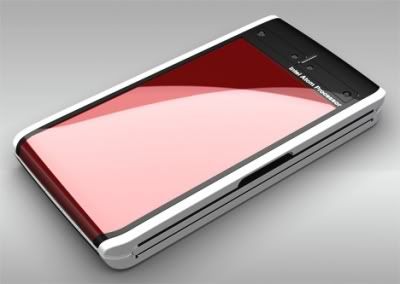
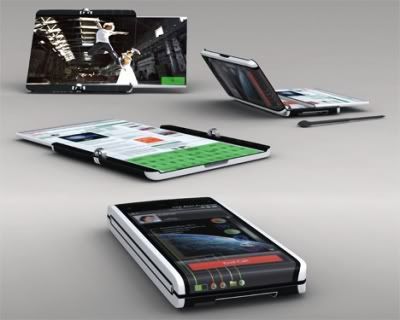
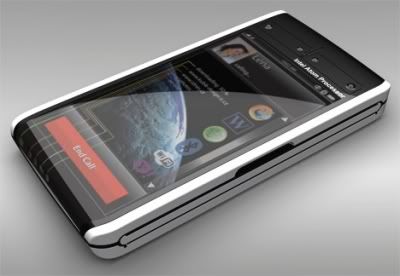
Can you fold your mobile? : New Triple fold screen mobile phone

New Triple fold screen mobile phone


Big screen is always in demand in the mobile phone. Because big screen give you an option to see photos and videos clearly. Now this mobile phone is coming with the folded screens. You can unfold these screen three times and as a result you can see wide and attractive screens.


Saturday, September 4, 2010

sony's show for latest gadget with new technology :Sony Expo Showcases Latest Tech

The annual Sony Hawaii Expo was held this week at the Ala Moana Hotel Hibiscus
 Ballroom.    Highlight of this year’s Sony Expo was the desktop Sony OLED flatscreen TV (shown above). The hallmark of this high tech wonder is its small size and crystal clear high definition picture. The screen itself is thinner than a compact disc jewel case.

Another hyped product at the Sony Hawaii Expo is the new Sony Rolly MP3 player. It is a new portable device that is shaped like a little barrel and moves to the beat of the music. The speakers on this device are positioned at both ends and open up with winglike flaps on each end. The device will not be marketed in the U.S. and is aimed only at consumers in Japan. If it were sold in the U.S. the price would be at around $400.
The Sony Rolly MP3 player. Sold only in Japan.
Face recognition “smile” technology for Sony Cybershot cameras were also a new this year. The new Cybershots can sense when a person smiles and fires only at that time. People were happily smiling for the demo at the Sony Cybershot booth. There were many other Cybershot digital still and video cameras that were also on display for consumers to play with.
I was most interested in the small super zoom, SLR-like cameras that I may want to get in an effort to find a capable SLR-like digital camera without all of the weight and bulk.
Last year’s hot product, the Sony Playstation 3 was almost like a has-been this year. Yes, there were displays of the venerable Playstation 3 for people to use, but the crowds around those stations were not very big. Sony is still marketing the Playstation 2 which is still the most popular game console of all time, despite Nintendo running away with the market lead on their new generation Wii product.
I am still interested in perhaps getting a Sony PSP, mainly for the fact that it can surf the web with its wireless internet feature. Another wifi device that was touted last year, the Sony Mylo, was nowhere to be seen this year. Sony still sells the device.
HDTV are the big products Sony is pushing this year as the Expo was dominated by flatscreen high definition sets all over the place. Going hand in hand with that were several Sony Blu-Ray HDTV DVD players. the pictures on the sets and from the players are incredibly clear.


People clamor around the latest Sony digital cameras.
Don’t know if I am ready to sink money in either of these technologies, especially Blu-Ray since it is locked in a format war with the rival HD-DVD. Beta vs. VHS all over again. I’ll wait for the dust to settle on this one.
Overall the Sony Expo was a great little venue to check the latest technology from one of the most popular electronic companies on the face of the earth.

from Australia's largest technology trade show: EO ultra mobile personal computer

Lia Timson rounds up the coolest gadgets at the latest technology trade show.


                                                                    Tech heads and early adopters must have had a field day at CeBIT, Australia's largest technology trade show. It wrapped up this week, clearing the way for the latest hardware and software to be embraced by consumers and businesses. Some of the gear is already available, other devices will arrive later this year. Much of it capitalises on the trend toward mobile work.
Among the stars of the show was the ultra-mobile personal computer (UMPC) - between a tablet PC and a personal digital assistant (PDA) - with full PC capabilities at half of the price of a tablet. The new $1650 EO from TabletKiosk is 50 per cent bigger than the average PDA, runs Windows XP and ditches Pocket PC applications in favour of full Windows software versions.
It's handier and lighter than a tablet or laptop and more useful than a PDA, primarily because of its 17cm touch screen. The UMPC will come with hard drives from 30GB to 160GB, and with memory up to 1GB. It is Wi-Fi and internet enabled, but does not have a mobile phone, although we are told one can be connected via Bluetooth.
Hugo Ortega, the principal of Tegatech Australia , distributors of the EO, says demand has already outstripped initial estimates, with 250 units sold in the first two hours of orders opening. It arrives in June.
"From what we've seen, there is demand for digital ink to take notes on the screen and have it transcribed to Word or other [program]," Ortega says. He says it will finally do away with paper notebooks carried around by students and note-taking professionals.
Samsung and Asus also have ultra-mobile PCs on the way soon.
Still on the portable stakes, a new credit card-size USB flash drive has arrived.
The compact Wallet Flash  has a double-sided USB port that sticks out and is small enough to fit snugly with other cards in your wallet.
Gilad Grinbaum, the director of G-Innovations , distributors of the Israeli-developed device, says it is waterproof, and starts from $30 for 128MB of storage.
If you're a mobile worker in tough and secret conditions, Panasonic's Toughbook CF-51 arrives in September. It is water and shock resistant and comes in a magnesium-alloy case. The 80GB hard drive is removable for security, and fingerprint and smart-card readers are optional. The series was designed to meet US military durability requirements.

is it car or fully featured of your gadget?: Mercedes-Benz F500 Concept Car

The F 500 Mind showcases the very latest technology
At the Tokyo Motor Show 2003, Mercedes-Benz presented the latest in a string of research vehicles which have attracted much interest and attention over the years and which provide fascinating insights into the automotive technology of tomorrow and beyond. Packaged as a modern four-door fastback saloon, the F 500 Mind mobile research lab showcases more than a dozen ideas for enhancing the safety, drive technology and comfort of future Mercedes passenger cars.

The DaimlerChrysler researchers will be using this vehicle to conduct the first practical tests of these innovative systems and pave the way for their commercialisation. The raft of innovations extends all the way from the night vision system with infrared laser headlamps to two-way doors and a programmable multivision display in the cockpit. Electronic accelerator and brake pedals, an interior pillar which provides structural rigidity and an ultrasound driver information system are further features being tested by Mercedes-Benz in the F 500 Mind.
For the powertrain, the DaimlerChrysler researchers have developed a high-performance diesel hybrid unit whose NEDC fuel consumption is up to 20 per cent lower than that of a comparable CDI engine. The state-of-the-art V8 diesel engine (184 kW/250 hp) from the S-Class has been combined with a powerful electric motor (50 kW) which is switched on and off by an electronic controller in response to traffic conditions and driving style. The electric motor can take over for example when moving off from rest, in stop-go conditions or in other situations where an internal combustion engine does not operate at optimal efficiency. When the driver demands more power, the V8 internal combustion engine cuts in to provide sharp acceleration. The 300 V battery for the electric motor is located under the passenger cell and is recharged during braking.

With a body length of 5092 millimetres and a wheelbase of 2965 mm, the F 500 Mind offers a significant gain in legroom in the rear compared with a conventional present-day saloon in this class. This was made possible by using innovative-design electronic accelerator and brake pedals which take the form of pressure-sensitive surfaces. Sensors in these “pedals” transmit the driver’s commands to the engine and SBCĂŽ brake system by means of electrical impulses. The technology takes up much less room than conventional mechanical pedals, increasing the length of the front footwell by 120 millimetres. The driver’s and front passenger’s seats can therefore be positioned further forward, so providing more space for the rear passengers. The steering, too, is controlled electronically.

Intelligent door-opening technology allows the doors to be opened in two different ways: either conventionally (both doors open forwards) or from the centre (centre-opening). In the latter mode, the B-pillar stump moves backwards with the rear door to provide a 1900 mm-wide opening for occupant entry and exit.

In the absence of full-size B-pillars, which would normally provide the all-important structural rigidity and side impact protection, the Stuttgart engineers came up with an innovative interior pillar which provides exemplary rigidity and typical Mercedes standards of occupant safety. The pillar is located in the middle of the vehicle towards the rear, and connects the reinforced floor pan to the roof structure. It also houses the air-conditioning ducts and interior lighting units.

The multivision display in the cockpit of the F 500 Mind forms the centrepiece of an innovative instrumentation and control system which offers the driver more flexible information delivery and at the same time reduces fatigue. The dials and displays in the instrument cluster are programmable and their images can be optically superposed or combined with the aid of a semitransparent mirror. In this way the driver can call up a wide range of information at the push of a button on the steering wheel. The information is always displayed directly in the driver’s field of vision where it can be seen easily and will not distract him. A further display, the central display unit, is situated above the centre console. It is linked to a touchpad whose surface is divided up in exactly the same way as the surface of the central display. By briefly touching it, the driver can control the navigation system, radio, air conditioning, telephone and other systems.

Further switches and keys in the vehicle are equipped with special sensors which can detect the driver’s approaching hand even at a distance of several centimetres. They then immediately call up the relevant function in the central display, for more convenient operation.
An advanced-design voice control system and an ultrasound-based driver information system take convenience even further. The ultrasound technology targets the sound at the driver so that only he or she can hear the information from the navigation system, the traffic news and other sound-based information sources, while the front passenger and rear passengers remain undisturbed.


In the dark or in poor visibility, the innovative night vision system projects its images onto the right-hand display. The night vision system consists of two infrared laser headlights on the front of the vehicle which “illuminate” the road with their invisible light over a range of up to 150 metres. The light reflected back from other vehicles, cyclists or pedestrians to a camera mounted on the front windscreen of the F 500 Mind is projected in black and white onto the multivision display. This allows the driver to spot hazards much earlier than in a vehicle operating on conventional dipped headlamps, which have a range of only about 40 metres. Thus Night Vision offers further opportunities for making night driving safer.
As a mobile research lab, the F 500 Mind is equipped with a special “laboratory bench” which folds out towards the rear. This allows a researcher sitting in the back of the vehicle to monitor and control the vehicle systems during testing on the proving grounds and to carry out measurements. For example the researchers are planning to use this fascinating vehicle for intensive user acceptance-testing of the innovative instrumentation and control system and for further practical testing of the diesel hybrid drive system and the Night Vision system.

man or robot:Cyberdyne is coming with the world latest technology of robot


A Japanese Company Cyberdyne 


is coming whit the world latest technology of robot. It is very interested to know that really it is very interesting device because it helps to disable people, we can know it the name of this device, HAL or Hybrid Assistive limb, it is a very unimaginative robotic suit for all robotic fans who are waiting for something special in this robotic field. This unimaginative robotic suit is very helpful for all disable and elderly people because it has the quality of reading brain signal and has far reaching benefits. This technology is the latest technology for the robotic field and it based on the computerized technology which has come with sensors device. In this robotic suit, reads brain signal and directs limb movement always comes through the skin which helps to disable and elderly people for moving around. It is very easy to use for them because it is worn as a belt around the waist and operated by a22 pound battery.
The Japanese company has come with this product of the cost of $1,500 for a monthly rental fee. Why we are saying so much about this interesting product because it really works so well how, first it has a sensor whish help for capture the brain signal and it goes thorough mechanical legs braces strapped to the thighs and knees. Which then provide robotic help to disable people where they want to move any where? Really this product are very useful and it will be very useful and helpful for medical line where a lot of disable people who can not do any thing whit out any help so Japanese are really such a god for them who are bringing this helpful robotic suit.

latest Technology and new feature :cycle like Mercedes ?


How cool is this new Mercedes Concept Car?


It sure looks like an old-fashioned carriage, but according to Mercedes-Benz this will be the car for the future. Built with large spoked wheels, Mercedes-Benz has decided to go with traditional design features and latest technology. Good combination?


say very cool car , is powered by a hybrid drive system using an emission-free fuel cell. With a top speed of 15.5 miles an hour (25 km/h) you won´t be late for work. 
Taking a look inside this amazing car we will find carbon-fiber bucket seats with hand-stitched leather covers and a distinctively styled fiberglass front section that is inspired by Formula One racing cars. The car is controlled by a joystick instead of a regular steering wheel.
Related Posts with Thumbnails